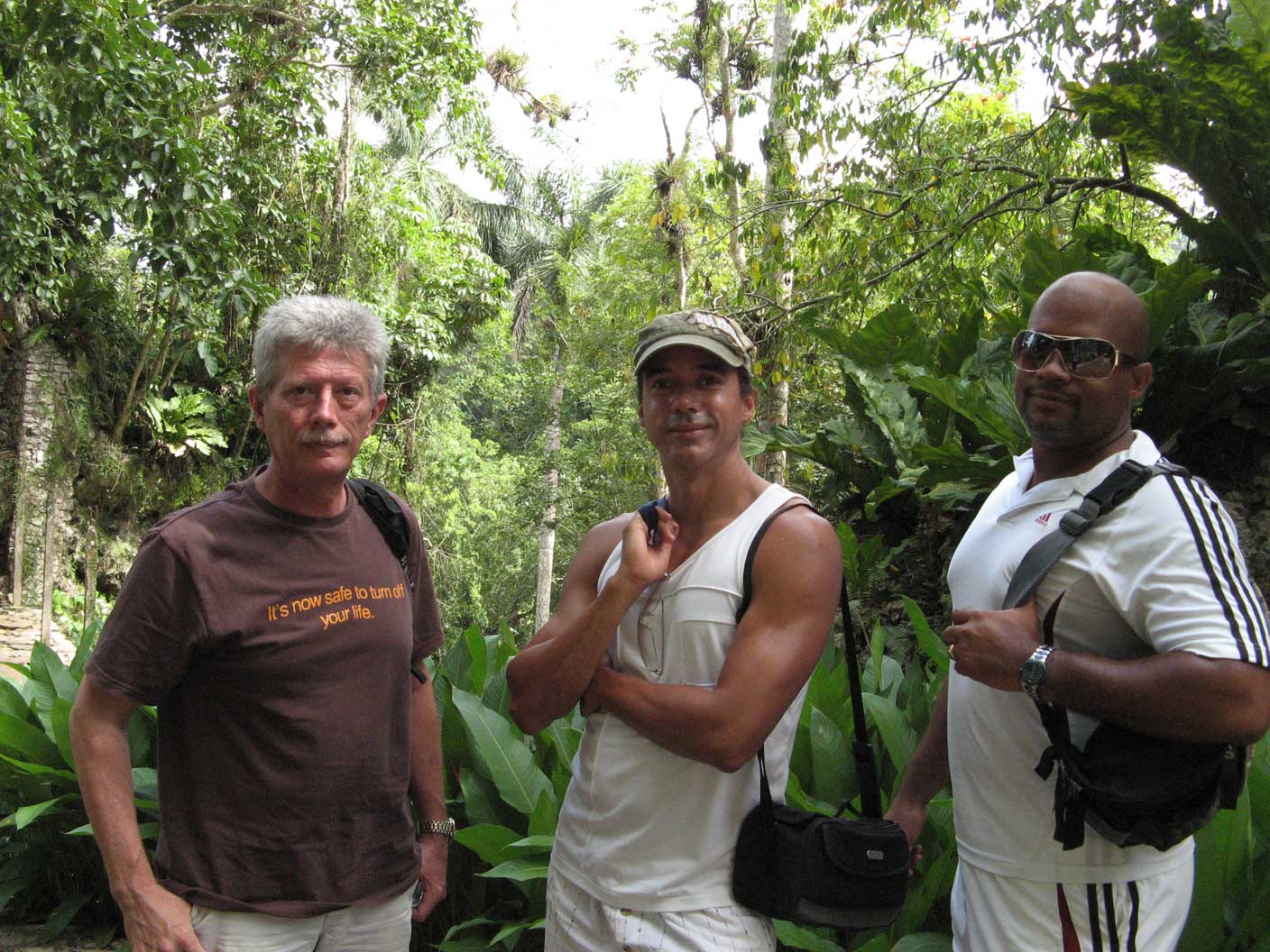
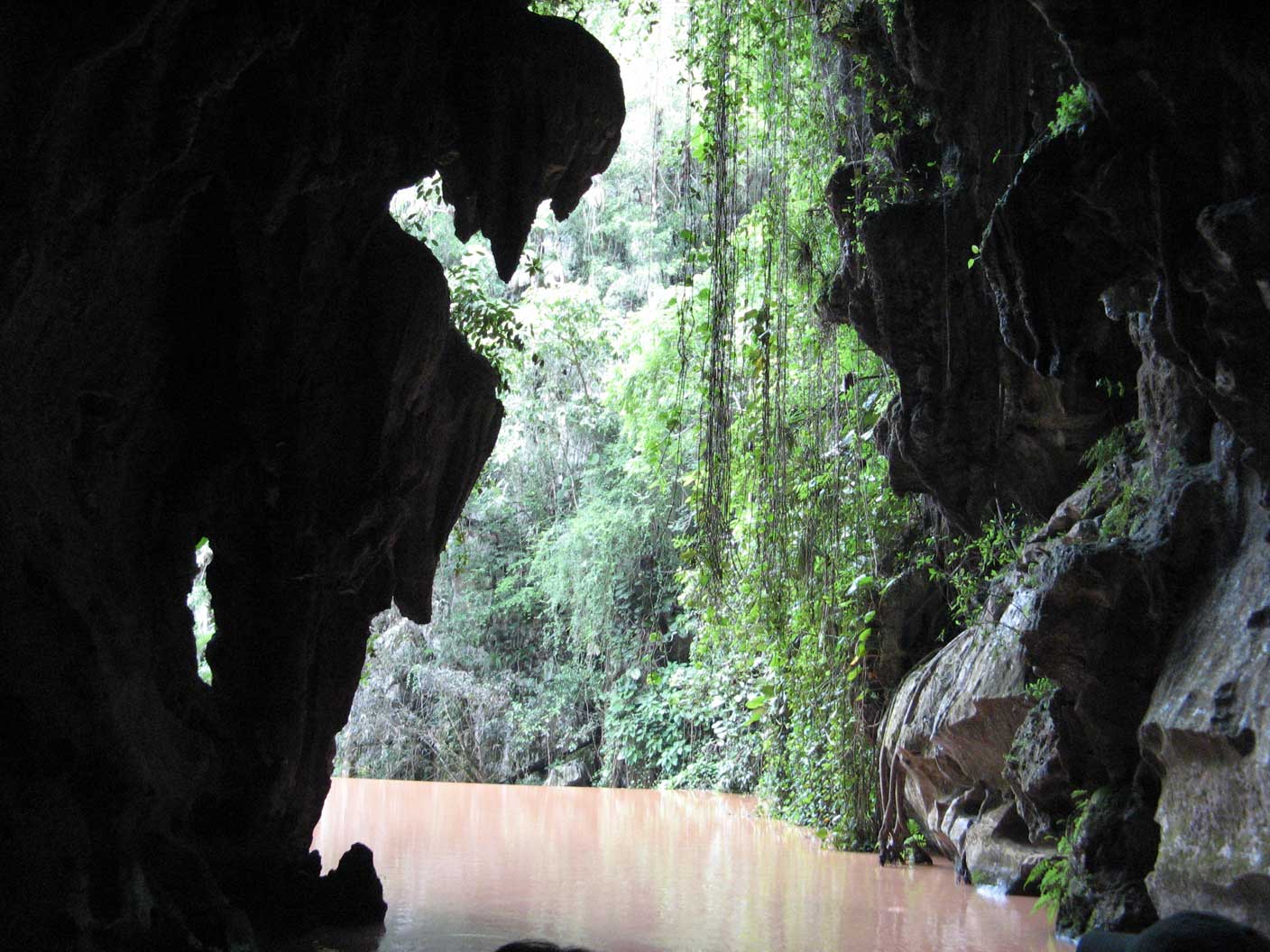
We had barely spent one day in Havana before we made our first excursion out to the province, heading toward Pinar del Río. On the way to Viñales (another lovely town), we stopped in Soroa to visit a botanical garden that was once the private garden of a house, a property that had belonged to a German before the revolution.
I've always had a soft spot for orchids, and here in Mexico I've kept a few, attended exhibitions, and done the same when we visited Buenos Aires. Especially during the years we lived in Thailand, we came to know many rare species and went to various exhibitions and competitions, so I thought there would be nothing new to discover here. But surprise: an orchid we had never seen before, and certainly never smelled. It smells of chocolate, which struck us as wonderfully strange.
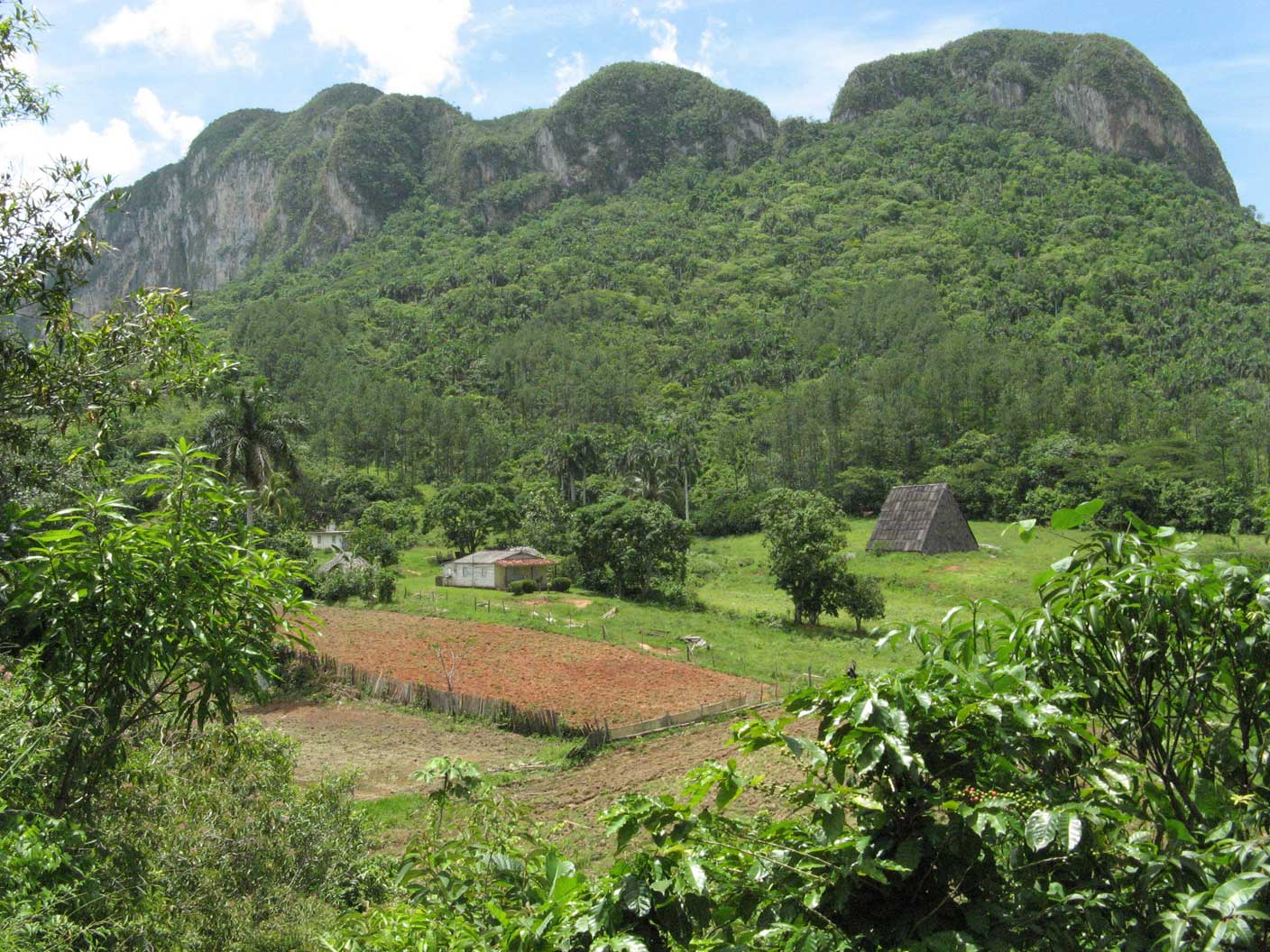
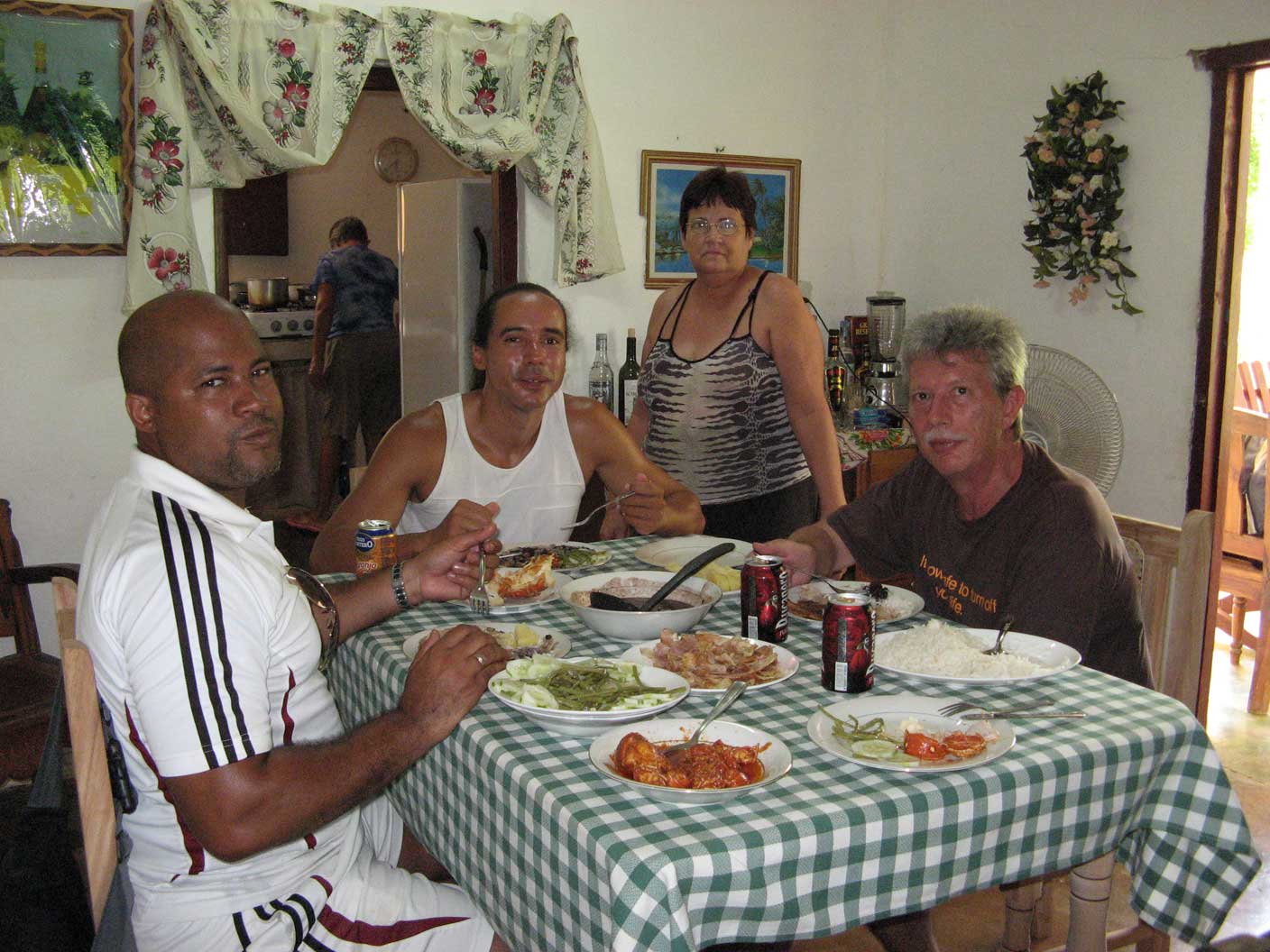
We had barely stopped when a man approached us, offering to take us to his house and cook us a good meal of lobster or fish. All of it very discreet, because it wasn't a licensed paladar, so we had to hide the jeep where it couldn't be seen from the road. We would have to wait for the women of the house to prepare the meal.
It turned out to be an excellent decision, because the wait itself, sitting on a kind of porch, drinking Cuban beers and taking in that view, was more than worth it, and then we ate magnificently.
That is how the day concluded, back in Havana again, raising mojitos to toast Juan's birthday, which fell on precisely this July 24th.
On the 25th we spent the day in Havana again, in the company of Alex's friends, a very interesting group of people, all educated and holding positions in Cuba that allow them to view the Cuban situation with a certain objectivity.
We met his history teacher, a specialist in Caribbean history. A fascinating person we would have loved to talk with longer, but time flies, and the interesting people we met were many.
Most thinking people acknowledge what the revolution achieved, but also what has been lost in the recent years of political stubbornness under a regime that grew old alongside its leaders, though one that also clearly faces pressure from the wealthy and powerful nations of the world.
The Cuban people in general, rather than surrender their country again to another tyrant, would sooner starve. A people of enormous pride, and a beautiful mixed heritage of European, Black, and a thread of Chinese. They are a striking race, nearly all tall and well built.
On July 26th, the day commemorating the revolution, we were invited to Héctor's house to celebrate that important date, especially for his family, who are committed Communists and convinced believers in the triumph of the revolution. Alongside this occasion, they also celebrated Juan and Héctor for birthdays that fall only days apart. On the mirror hanging in the dining room, they had written congratulations to both of them and, of course, first and foremost, to the REVOLUTION.
Even if we don't entirely share the thinking of Communist Party members, I can't help but recognize many of their achievements, among them having shed the religious burden that holds back so many Latin American societies.
Cubans are great thinkers precisely because they don't mix religious beliefs, priests, or temples with politics and scientific ideas. Bravo, Cuba, for that. They also eradicated extreme poverty, and everyone has access to medical care, even if today it's not as good or efficient as it once was. The whole world suffers from a crisis of scarcity for the poor, partly because we are so many on this planet and solidarity is in short supply. But at least the Cuban people no longer reproduce indiscriminately. Everyone is conscious of the situation, many couples choose not to have children, and those who do typically have only one.
We spent a very interesting and lively evening among wonderfully warm people, ideological differences notwithstanding. The next day Héctor had to return to Bangkok, and the two of us stayed on with Alex to continue the trip.
Now we were heading out to the province for several days, pointing the jeep east toward the town of Manicaragua in our rattling rented Suzuki. That vehicle, once it got up to speed, made a noise as though we were about to take off at any moment, but it proved very effective given the general state of the streets and the roads we scrambled up like goats.
The indigenous people who inhabited Cuba were the Taíno and the Siboney; the name Manicaragua comes from their languages and means "Land of brave men." And brave they are, because it takes courage to live in a town that, aside from pretty countryside, has absolutely nothing, and when I say nothing, I mean nothing. No shops, no cafeterias, no restaurants, no cinemas, and certainly no luxuries.
The afternoon we arrived we spent getting to know Alex's family, asking them questions and answering theirs, because with the spontaneity that defines Cubans, they immediately begin to share their sorrows and shortages, the hopelessness they find themselves sunk in, and the powerlessness to change things.
People in the countryside have even fewer opportunities to leave the country, even now that it's somewhat easier to travel to visit family, because permits can take years and the wait becomes unbearable. This is the case with Alex's father, who, with plans already made and certain expenses already paid, was denied an exit permit on some absurd pretext.
It's evident that they have suffered greatly from the deprivations that their political system has produced. During the Special Period they could barely obtain the most basic foods (though in the countryside always slightly better than in the city), but the things they were forced to eat were the same things people eat in wartime.
The state also doesn't permit them to conduct any kind of trade with what they grow, though they do at least have better access to fruit, vegetables, and eggs. Many Cubans have a deep aversion to eggs, having eaten far too many of them during that grim period.
Since both Juan's family and mine have had relatives who fought in the Spanish Civil War and then in the Second World War, I think all these stories, which so closely resembled what we heard in our own homes growing up, cut deeper for us than they might have otherwise.
A figure like Castro could be considered a symbol of communist success, and yet for so many political reasons and conflicting interests, he never opened up the economy to a people who have been crying out for it, never allowed them to develop as individuals. When you witness the human cost and suffering, it seems impossible to justify. Revolutionary ideals and left-wing ideas genuinely seduce me, but dictators do not.
It's worth remembering that Fidel Castro, Camilo Cienfuegos, Salvador Allende, and others who launched this revolution all came from wealthy families. Because revolutions are never started by the poor.
It's astonishing to see the yacht on which a handful of men took Cuba, because this vessel, named Granma and which we saw in the Museum of the Revolution, is no larger or better than the boats many wealthy (though not millionaire) people use for weekend outings.
At least in this revolution, the men who conceived it also went to the front, unlike in this twenty-first century, where leaders remain in their offices and residences, or go fishing, hunting, or playing golf.
The day after we arrived (many of you will be left open-mouthed, knowing I'm an atheist who practices no religion), I decided I wanted to consult Alex's cousin, who is a médico santero (a Santería healer, as they call it there), purely for the experience. Imagine my surprise when, throwing the cowrie shells, he began to tell me things about myself that very few people know, and some that nobody knows at all. This, together with the seriousness and conviction with which he performed everything, makes you open up and let yourself be enveloped by the energy that is generated.
The altar, with that syncretism of voodoo and Catholicism similar to what exists in Mexico but also quite different, is composed of all manner of saints, artifacts, and curious objects, including a branch that smokes.
I had witnessed a ceremony in Catemaco about twenty years ago, but it struck me as very much charlatan territory. Perhaps we simply didn't find a person like this one, who, though I will never become a devotee of anything, genuinely impressed me, and I now wait to see the results he told me I would see.
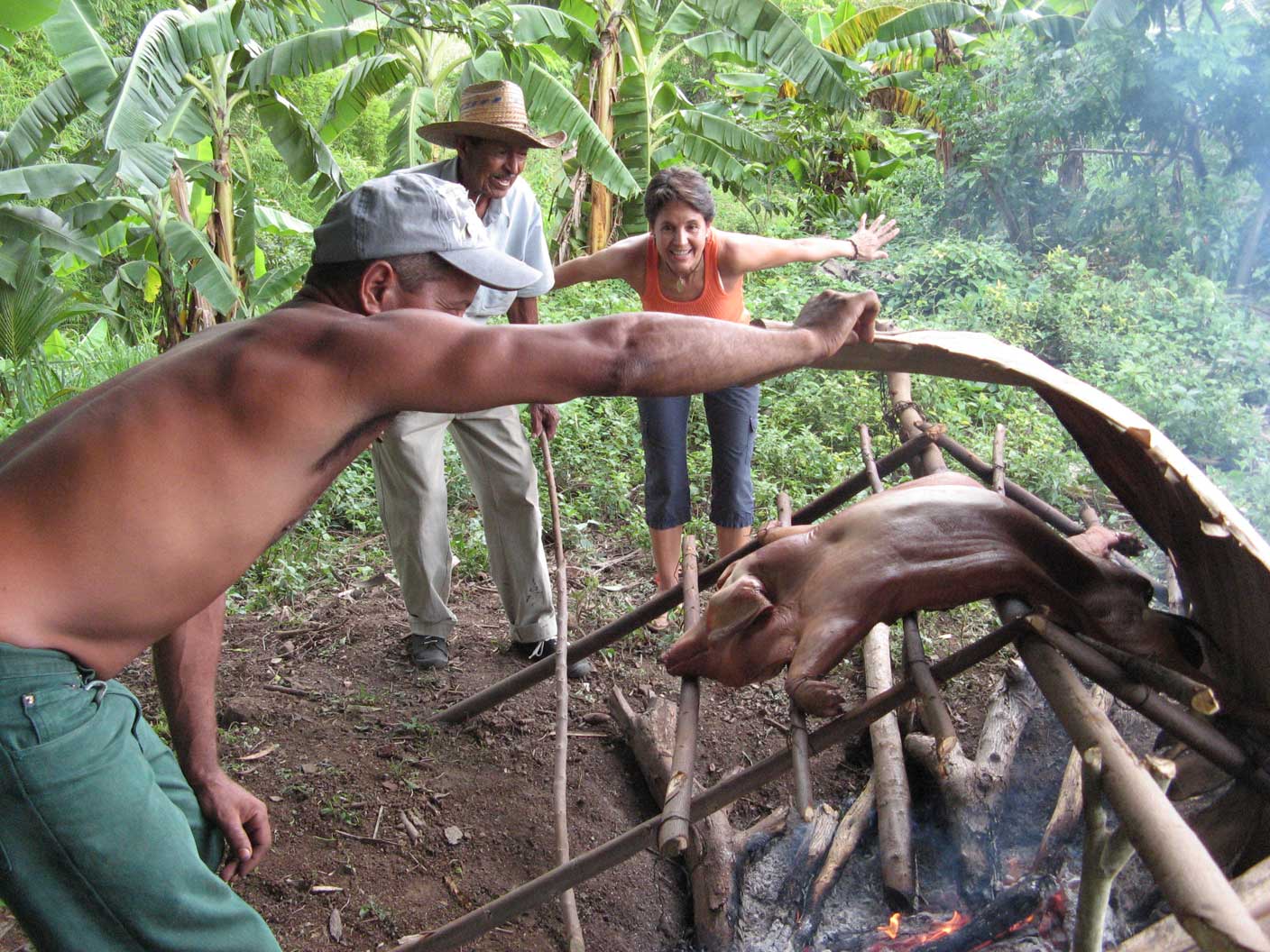
They cooked that delicious pig for more than eight hours and it came out extraordinary. We ate, and all of it was accompanied by a guitar they had found for me so I could sing. The enthusiasm of those people moved me deeply, all over again.
The praise and applause were overwhelming. The curiosity of neighbors who listened from a distance through windows in the other grandmother's house, another time when I sang a cappella, was something incredible to witness.
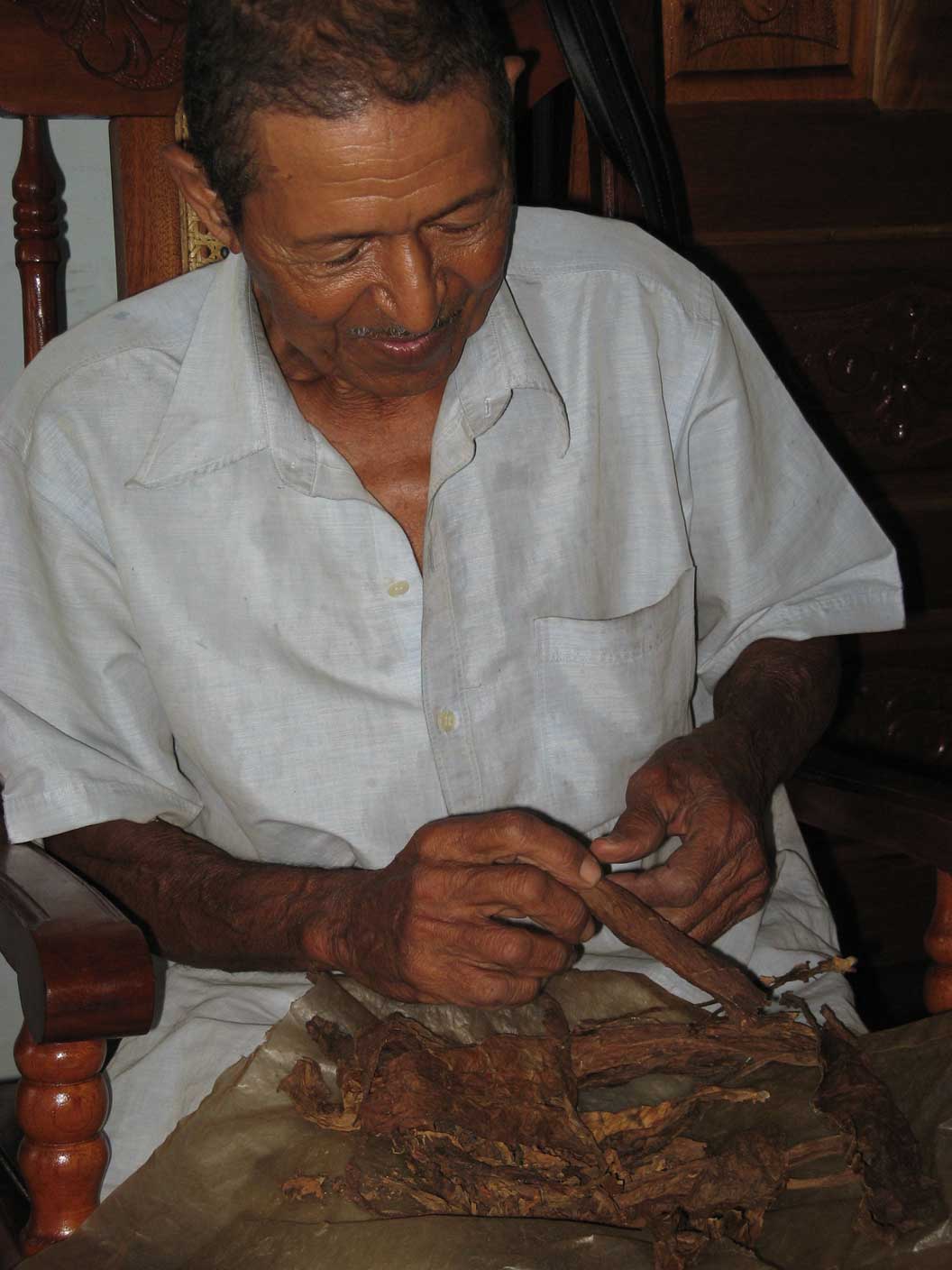
This pair of Alex's grandparents (you can see them in the photos) look as though they stepped out of a Cuban postcard, because both are over ninety years old, and their bearing, together with those beautiful wrinkles that the country sun draws into a farmer's skin, makes them more authentic and more human, an entire human beauty unto themselves.
We visited the city of Trinidad, which is gorgeous and which would be the place I would try to live in if I were Cuban. There seems to be more ease here, because there are shops, restaurants, and a great deal of life. People look happier, and you can buy a few things to eat on the street as you can in other countries, eating them without guilt because they're paid for in regular currency and people can buy the same things as you, the tourist.
We delighted in the painters you encounter at every turn. Some of them are genuinely talented, though often forced to paint very commercially and cheaply just to survive.
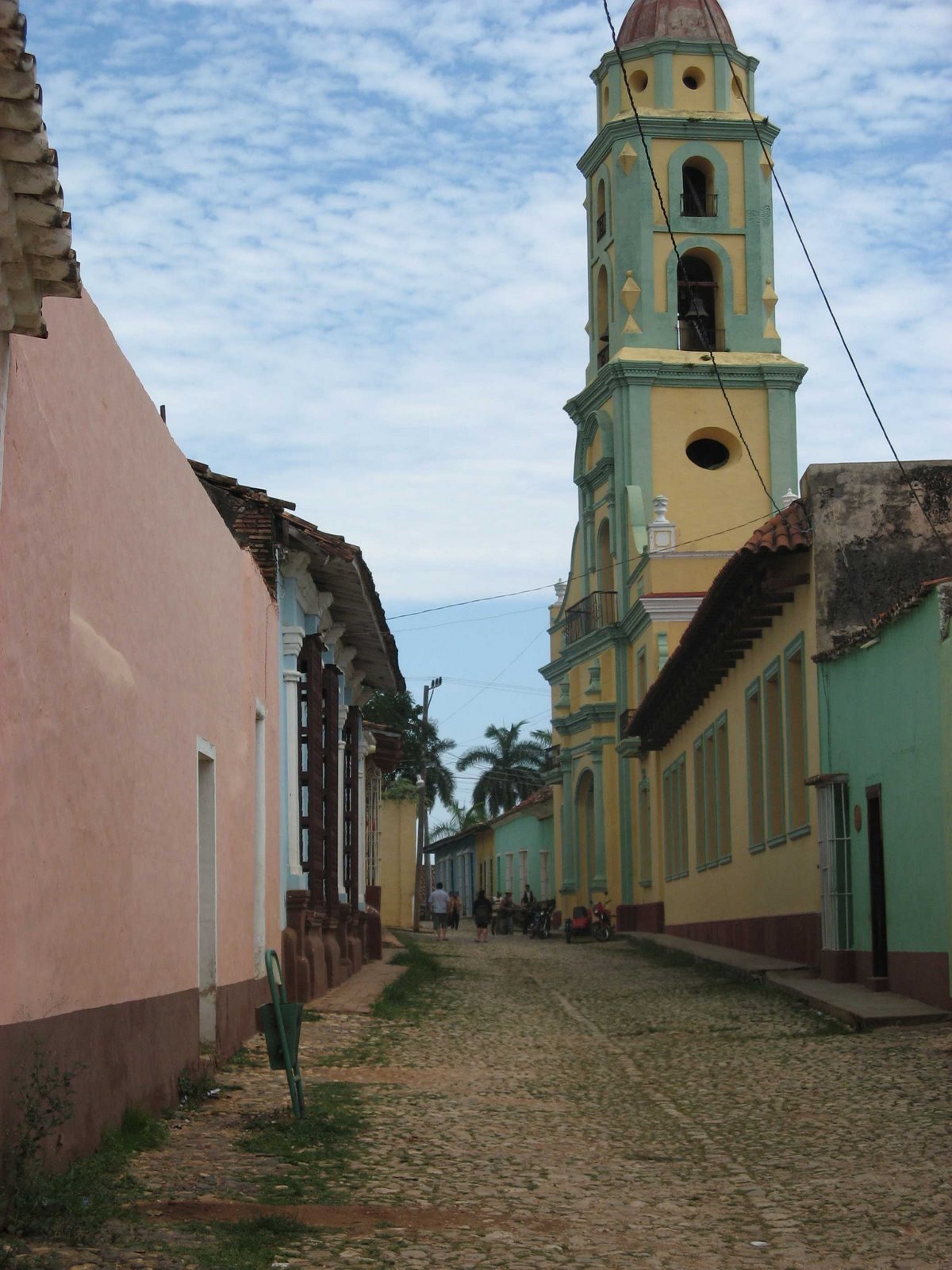
The city of Trinidad has a very distinct flavor, its cobblestone streets so beautiful, the typical Cuban houses well preserved in their great majority.
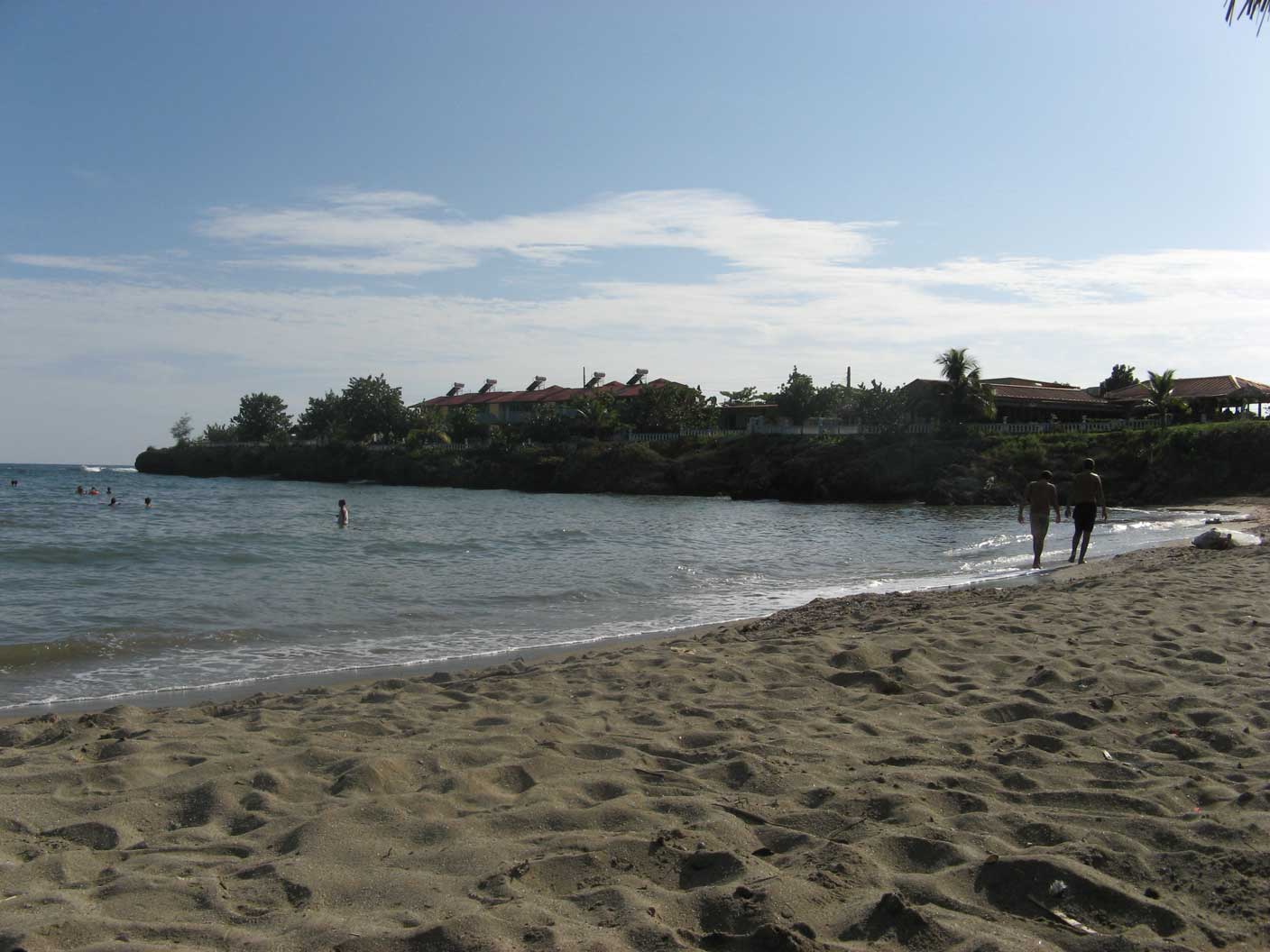
After that we stopped for a few hours at a beach called Yaguanabo, which was beautiful despite being quite dirty, because Cubans, it must be said, throw everything on the ground, and I shudder to think what it will look like when they have more things to throw.
It's fascinating to see how people entertain themselves in these towns. They organize a kind of lottery, for instance. A neighbor comes by, you choose one or several numbers, and I don't know exactly how it works, but the next day you might walk away with money, and if you weren't lucky, you can try again. They take it very seriously and enjoy it like everything else, because when you have little, you appreciate the simple things in life more.
They also play Cuban dominoes, but even buying a decent set of dominoes is difficult for many people, since these towns have very little of everything.
Alex has an aunt who, like most Cubans, has an unusual name: Malengue. She earns a little extra money trading in whatever she can get her hands on, much of it things Alex brings her from Thailand. One of her businesses is applying fake nails, and apparently she "puts on quality nails," delivered with all the grace of the Cuban character and her own particular style, often shouting and speaking in pure local slang. She tells anecdotes that make you laugh easily, though sometimes we needed Alex to translate because if she put her mind to it, she might as well have been speaking Mandarin.
She told us that a woman had come to her house screaming: "I'm a miserable fool, everyone knows it, and that's why they take advantage of me!" She was crying inconsolably because she had spent too much of her very little money on fake nails, only to have been given bottle nails. This means that some enterprising souls cut nails out of plastic bottles (the kind used for soft drinks) and glue them on with superglue. Even if it made us laugh, it's genuinely sad, because I realized that for Cuban women, having beautiful, long, well-painted nails is perhaps more important than many things I would consider more pressing.
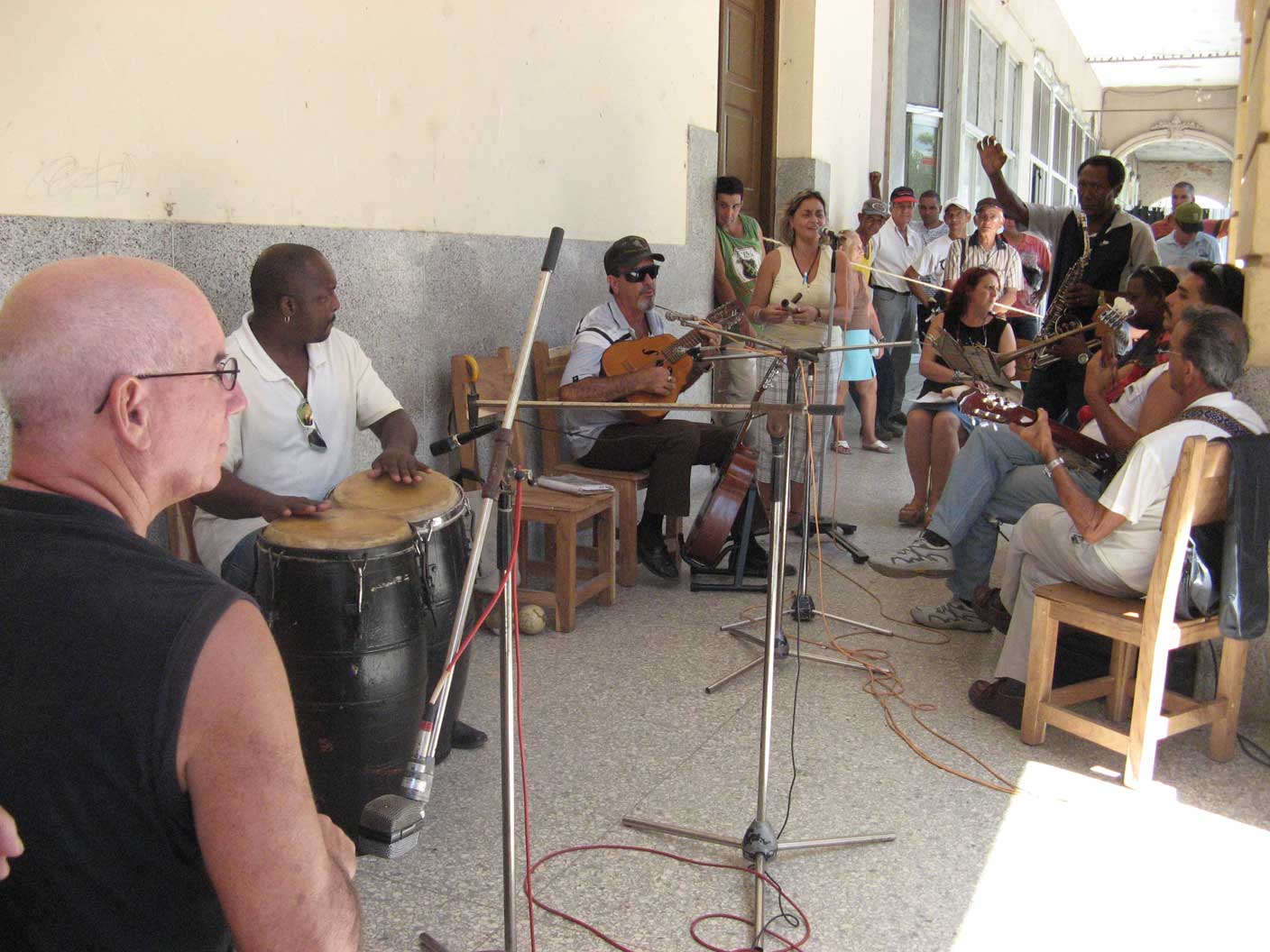
Another day we went to the city of Santa Clara and, as always, we walked through it and came across, in the main plaza, a group of musicians playing and singing very well. They were recording it for the radio, and they explained that it happens every day as part of a well-known program called "El Cocodrilo Verde" (The Green Crocodile).
Here in Santa Clara I tried some pastries made of puff pastry and meringue that looked like cream, and only when I found out it was meringue did I dare eat one. They're called Señoritas and they taste wonderful. They reminded me of some of the street meringues you find in Mexico.
Out here in the countryside, we were moved deeply in matters of feeling, because these people truly lack so much and yet share the little they have with a generosity that breaks your heart.
Since we brought some sweets to the healer's family and I sang again alongside him (he has a fine voice, incidentally, and showed me just how many Mexican songs he knows by heart), they invited us to eat. You won't believe it, but in Cuba I heard more Mexican music than I hear here in Mexico itself. Mexican music is greatly loved there, and in the province they adore northern corridos.
For the meal, they killed a turkey (they called it guanaco) right then and there and cooked it, so we spent nearly the entire day sharing time with the family.
The expression on the healer's face is one of innocence and peace, but his wife carries a trace of sadness. Everything balances out when you watch the children enjoying whatever comes their way, perhaps because of living in contact with nature and not knowing anything else to compare or envy.
At dusk, with a single whistle from one of the owners, the animals begin to trot in toward their enclosures, which left me, a city person through and through, completely spellbound, as though I were watching a scene from a Walt Disney film.
The last day of our trip into the province was spent with Alex's father and his paternal grandmother. This grandmother is quite a character, and we hit it off immediately. She and her son also hosted us in their home and were extraordinary hosts.
We ate magnificently, with everyone constantly trying to anticipate our wishes, and I want to emphasize again how deeply that hospitality moves you when the people offering it have so little.
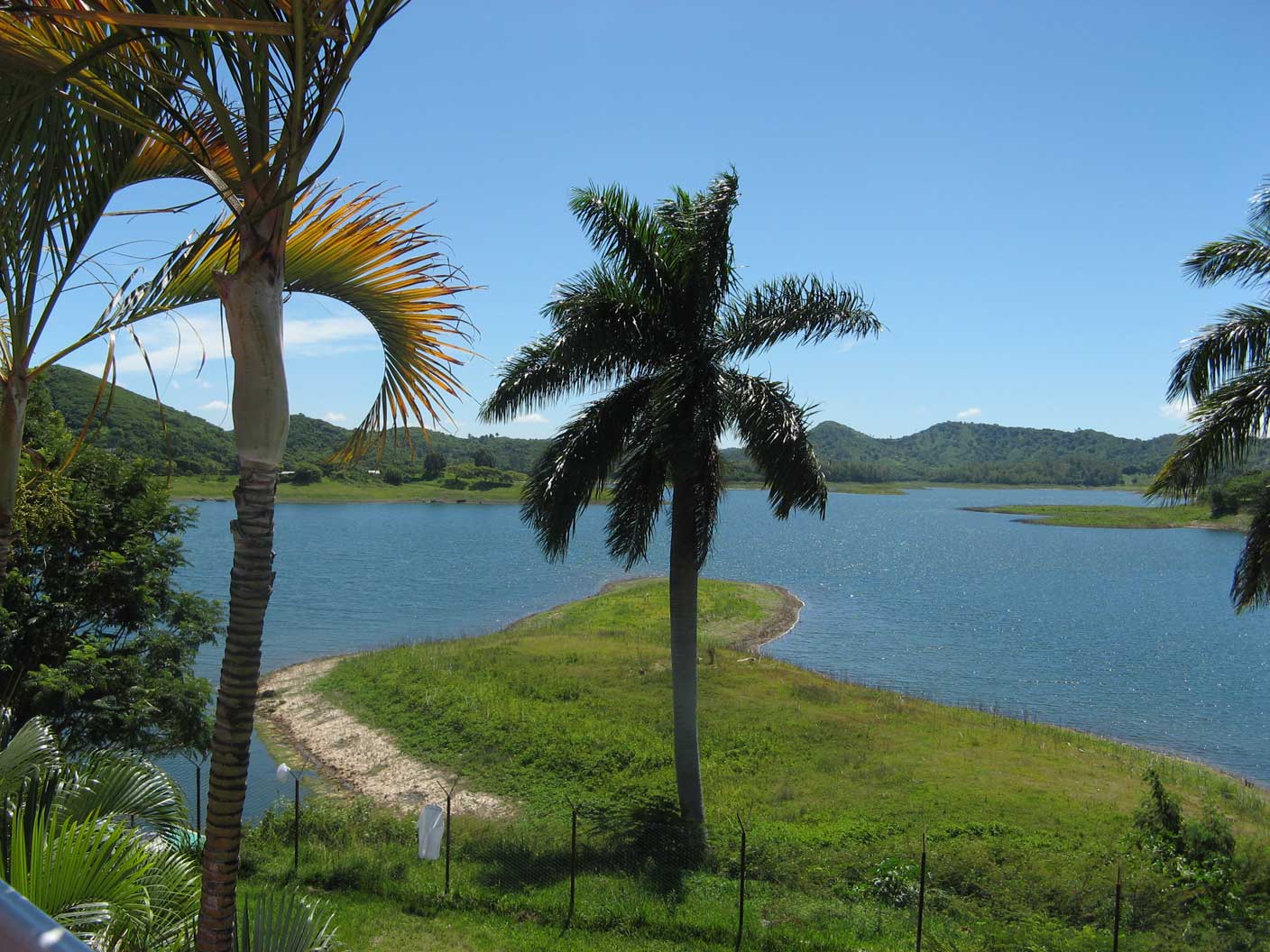
Although the grandmother can no longer walk well because of a stroke she had some years ago (from which she recovered remarkably), we insisted on an outing that wouldn't require her to walk too much. It was a very pleasant excursion to see the Hanabanilla reservoir, which resembles quite closely the one at Valle de Bravo in the State of Mexico.
I felt myself in the past again, watching how something as simple as a swimming pool and a few drinks, regardless of the crowds, left everyone looking genuinely happy. So different from the long faces one often encounters in five-star hotels, where you can read in people's eyes the dissatisfaction that comes from an excess of everything, and the emptiness within.
Finally, at the home of the other grandmother and Alex's mother, who are equally warm and generous, they bought a bottle of Spanish cider to toast and say goodbye, but not before everyone promised we would return, with the offer of all their homes open to us when we did, and the hope that we would bring a little news and a little hope with us.
The last day in Havana we walked through it once more, simply trying to fix in our minds and hearts the essence of a people as interesting, contradictory, and hospitable as the Cuban people.
Sanuk (a Thai word for the joy of living fully in the moment)
Comments (2)
Amigos me he reido mucho con esta segunda parte de Cuba, bueno logico porque aqui sale el periplo por Manicaragua. Comparto todo con uds, mi abuela norma siempre me decia que no debia renegar de mi pueblo porque nunca me gusto, igual pasaba con mi apellido, pero ella siempre ahi fuerte para hacerme entrar por camino pero yo no, en la primera oportunidad que tuve me sali de alla, desde nino sabia que saldria porque no me gustaba, quizas por las carencias tipicas de un pueblo de provincia de Cuba, por la manera estrecha de pensar de mucha gente, no se...bueno pues bravo eh! Han logrado captar muy bien la realidad cubana, y es que se metieron o los meti en todas partes! jejejeje. SOlo un detalle, al inicio no es Matanzas, porque justamente Matanzas esta del otro lado, es donde esta Varadero. Pinar del rio y Matanzas son dos provincias distintas y distantes porque esta La Habana en el medio, el lugar es Soroa en la provincia de Pinar al igual que Vinales....Un gran abrazo
Este comentario ha sido eliminado por un administrador del blog.
New comments coming soon.