Here I go again, because life keeps bringing me back to Thailand, this deeply beloved Asian country where my husband and I lived from 2006 to 2008 and where, without a doubt, we left a piece of our hearts. The reason I'm returning (this time alone, nudged once again by our son) is to start a small culinary venture. I don't have a clear picture yet of exactly what it will be, but I'll tell you all about it in this blog, which is back to being about Adventures in Asia, with all its changes, just like life itself. I like this shift the blog is taking because it reflects the life that leads us, more often than not, to live or do things that were never quite planned. Because who ever promised us that we'd end up doing with our lives what we once imagined? If you never stray from the path you've drawn for yourself, can you even see the other trails? The only reason for being on this planet is to try to find out what lies beyond the obvious.
Permaculture and sustainable agriculture, though similar in purpose, are different approaches. Permaculture is focused on an ethic of intelligent, sustainable living and cultivation. This ancient but forgotten science is what brought my son back to these faraway lands.
From the start I feel a little at home in this beautiful Asian country, and I begin to explore the possibilities around food. I'm no chef, and I don't claim any special gift, but I think I've developed some talent through all these years of cooking and running my own experiments. We'll see what comes of it, and in the meantime I'm also learning something about the whole business of caring for the land and eating well, and if it's possible, why not try to bring what's cooked straight from the earth to the table? There's no better place to gain that knowledge than from my son and his wife, who have been involved in permaculture since their time in Mexico.
Because I am more than convinced that if those of us who are waking up to what's coming join forces, we might manage to spread the word to those who, buried inside the supposedly "civilized" system, will turn their eyes toward these new proposals. Most of us live in large or small cities of concrete, in buildings that consume energy at a rate wildly out of proportion to what the planet can bear. And then we ask ourselves: why are our houses flooded when it rains too much? Why does nature seem to punish us? Because human beings lost the true meaning of living fully in the last 100 years, and now we think only of accumulation and runaway consumption. How do you avoid being infected by the consumerist bombardment? It's difficult, but it has to be the challenge for new generations and for those of us who helped bring about the decay. Greed and the impulse to accumulate are what rule us today.
In 2007, we went to Borneo (Malaysia) to visit the jungle and meet its true inhabitants, the elephants, chimpanzees, and the many species of orangutans native to that region (I wrote about that trip in this blog). It was wonderful because we managed to see some beautiful things, but how heartbreaking that from the plane all we could see were coconut palm oil plantations, and the jungle, yes, we did see it, but it cost us to find it in the middle of so much destruction. Today I don't even want to imagine what it must look like now.
This past weekend I went to visit the place where my family is carrying out their permaculture project, and the incredible progress they've made left me speechless.
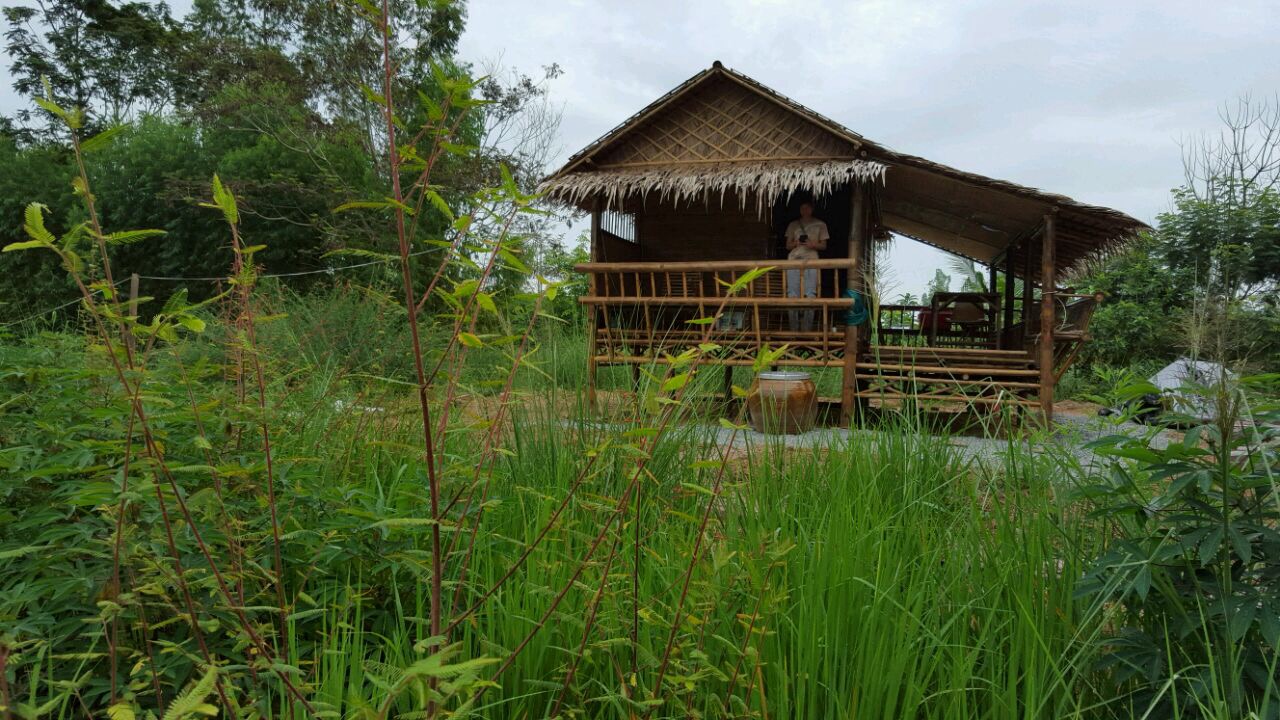
The bamboo cabin they put up, to which they recently added a kitchen and bathroom, is already receiving water from the small dam and lake they built last year using entirely natural methods, no cement at all. You simply have to observe (and of course permaculture is a full-on discipline) what nature is asking for and where it's happiest, so that it will give back that water, gathered during the rainy season, for its own irrigation during the dry months.
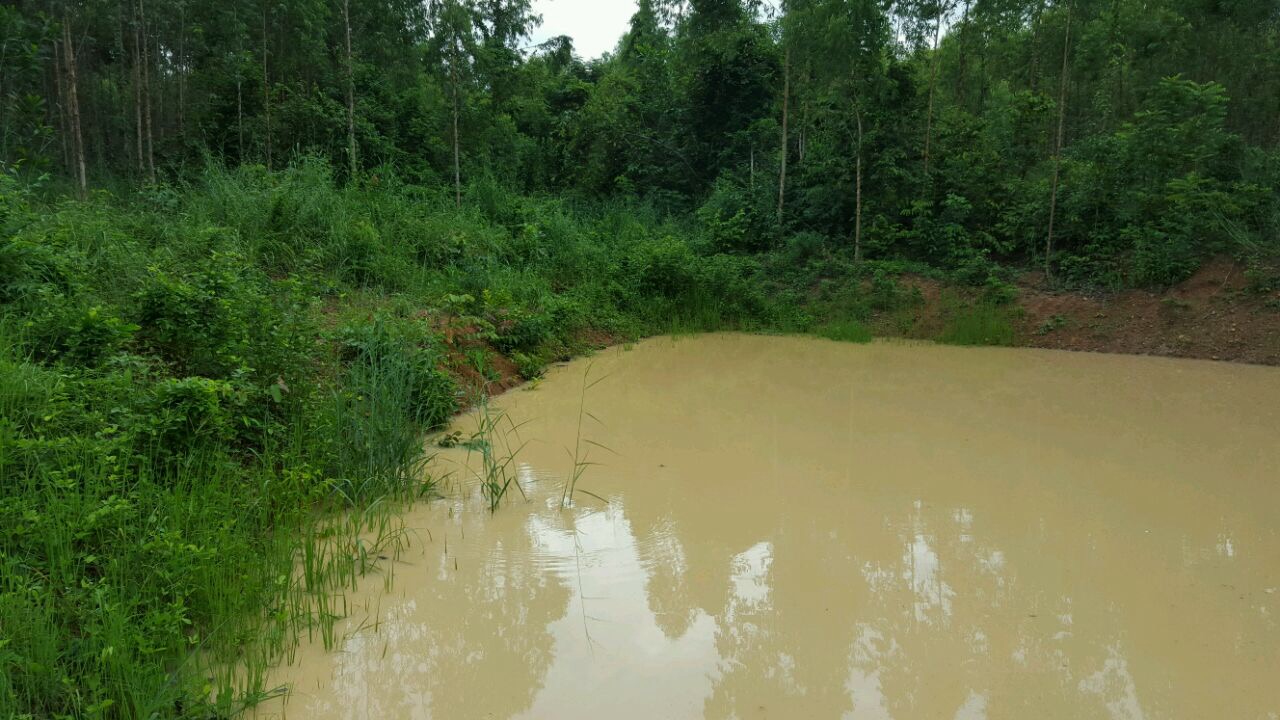
The area where this farm sits seems quite wild to us city people, but the truth is that it isn't. Here too, monocultures have done their damage in the same way (growing a single crop, or a few, across vast extensions of land), and these happen to be rubber trees, equally coveted for their many uses in "Modern Life." Eucalyptus is another monoculture I noticed, because its wood, being very resistant, is also in high demand. But this particular tree, when planted across large stretches of terrain, allows nothing else to grow around it.
I only managed a quick look at Bangkok, and I'll just say that at first glance its human jungle remains as fascinating as ever, and, to my eyes, increasingly incoherent.
Sanuk (the Thai art of finding joy in whatever you do).