There is a museum here in Bangkok that very few people know about, including the Thais themselves. Construction wasn't finished until 2006.
It gets no tourist publicity, but an Englishman we met in a park, who makes a habit of cycling through Bangkok and its outskirts, told us about the place.
If you don't have a car or a friend with one, you can take the Sky Train to the last stop, called On Nut. The museum sits between Sukhumvit and Theparak roads.
Once you get to On Nut and step off the Sky Train, you really have no choice but to take a taxi, because there's no other reasonable way to get there if you haven't mastered the bus system.
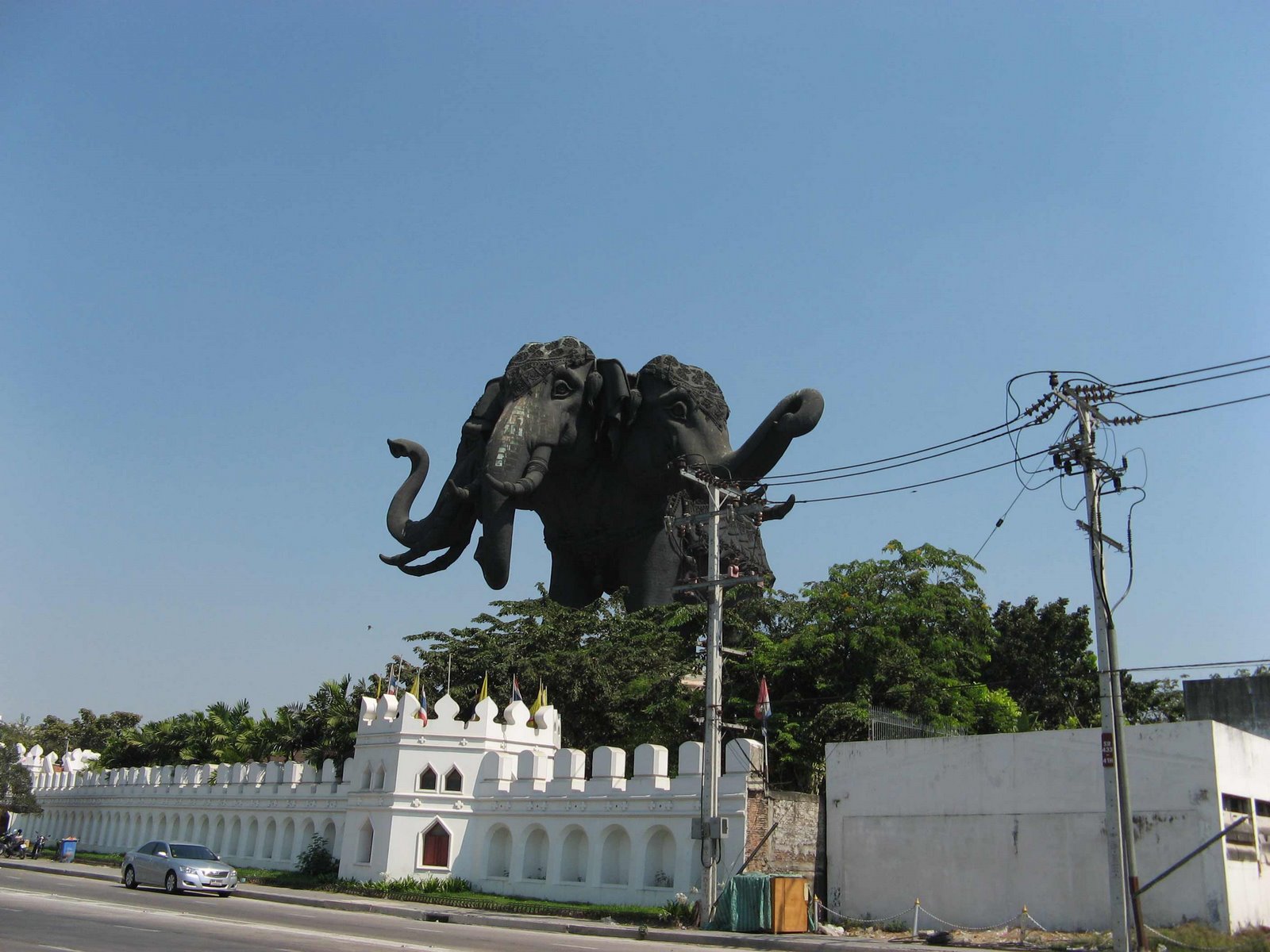
The museum is called The Erawan Museum. It was built by a millionaire (very eccentric, to my eye) named Khun Lek Viriyapant, who decided that Thai traditions must be kept alive and their cultural knowledge spread, so that young people and the general public might have a real understanding of them.
Another stated purpose of the museum is to give Buddha images and art objects a well-cared-for home from which they can be shown to other countries of the world.
The final purpose is to create something that architecturally and cosmographically represents this Southeast Asian world, including the underworld, like Mount Meru, and the area housing the Buddha images, like the paradise of Tavatimsa.
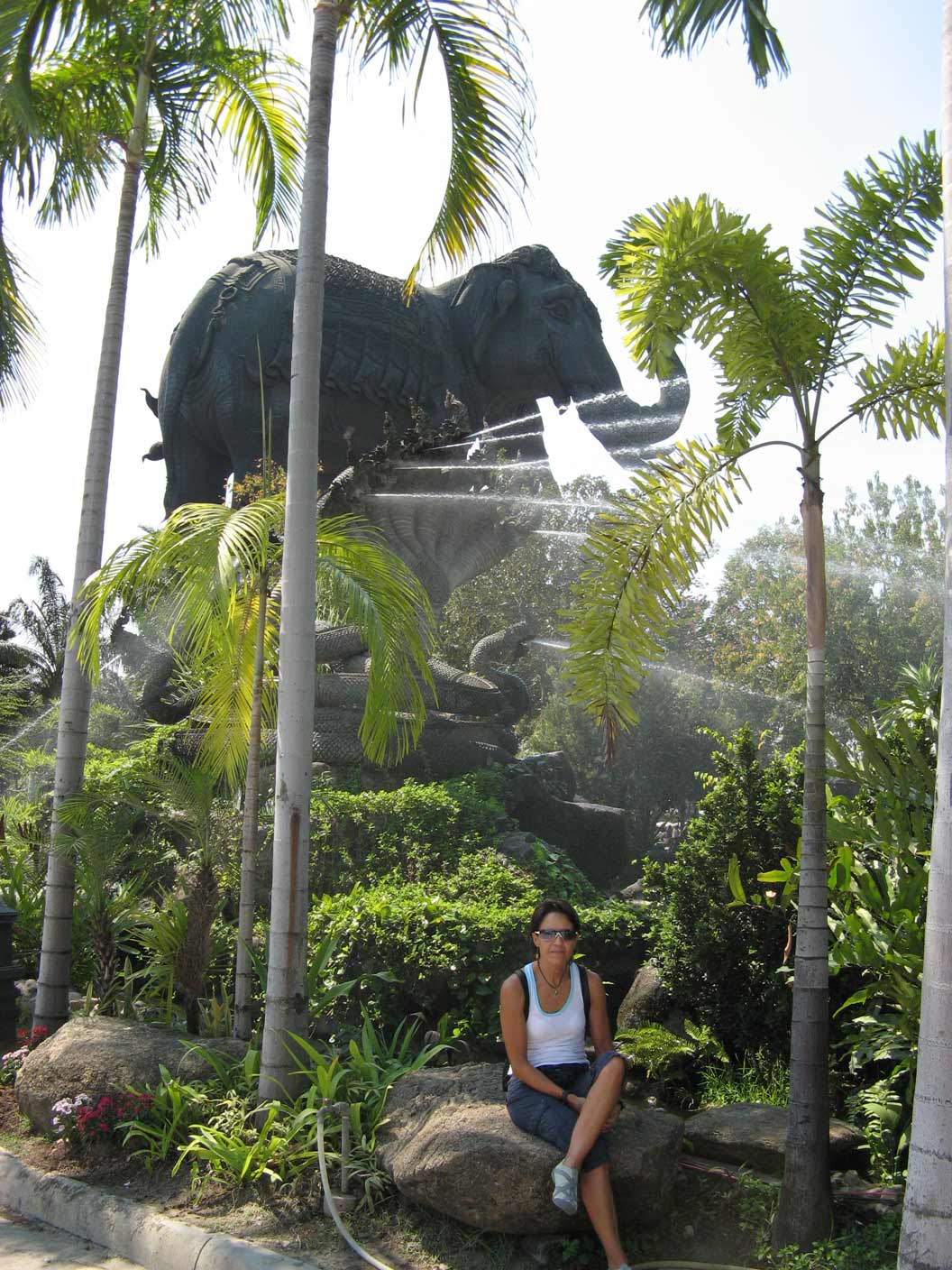
The whole grounds are filled with plants and water, as is the custom here, and there's an open-air altar where you can pray, toss wooden sticks that stick out from small wooden boxes and fall to form a number that will be your fortune. You then go to where the little papers are arranged by number and take the one that matches yours. You can light candles (included in the price of admission) and some incense, so that things go well for you. Also included is a beautiful lotus flower that you toss into the water, with a wish.
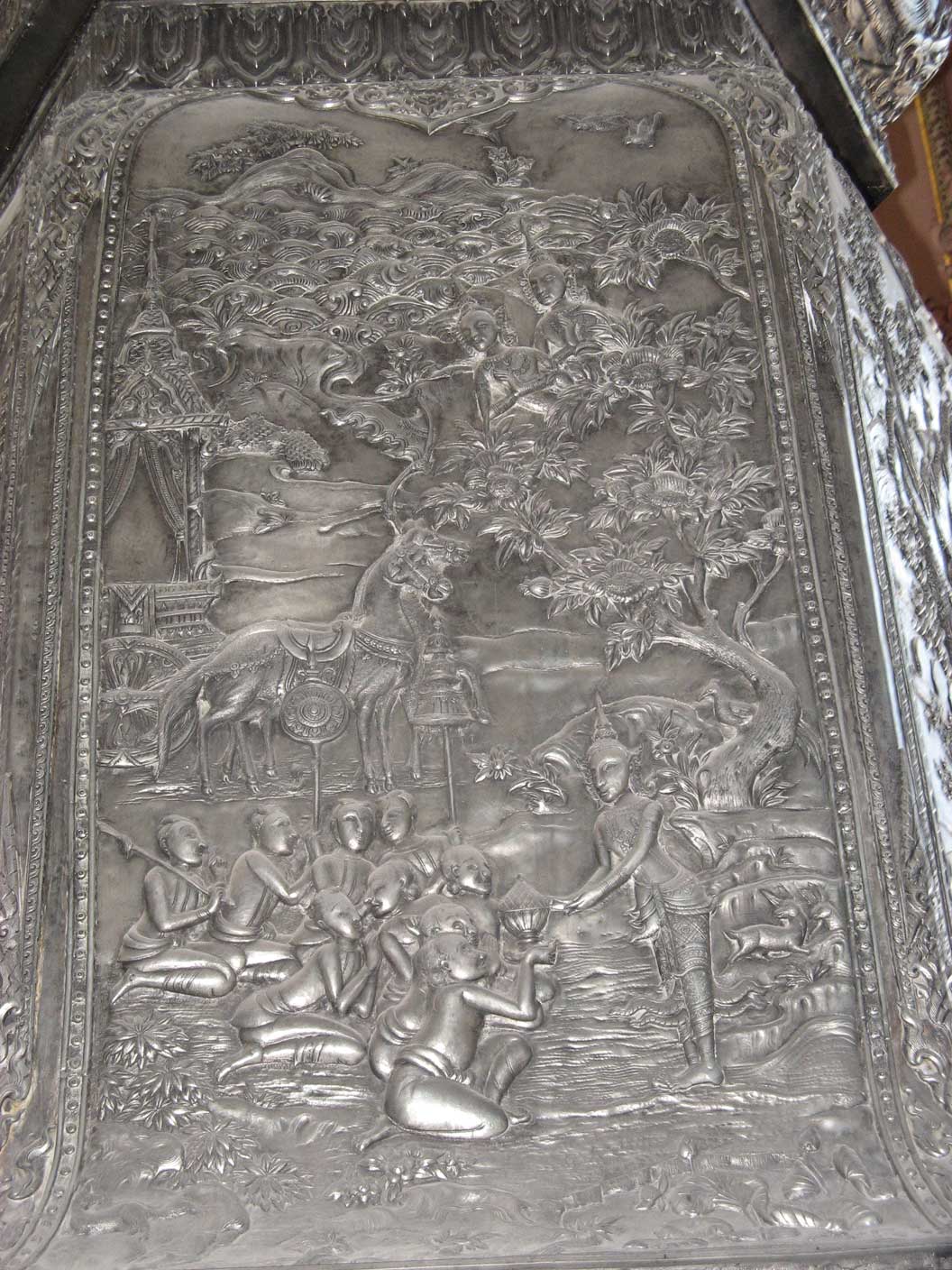
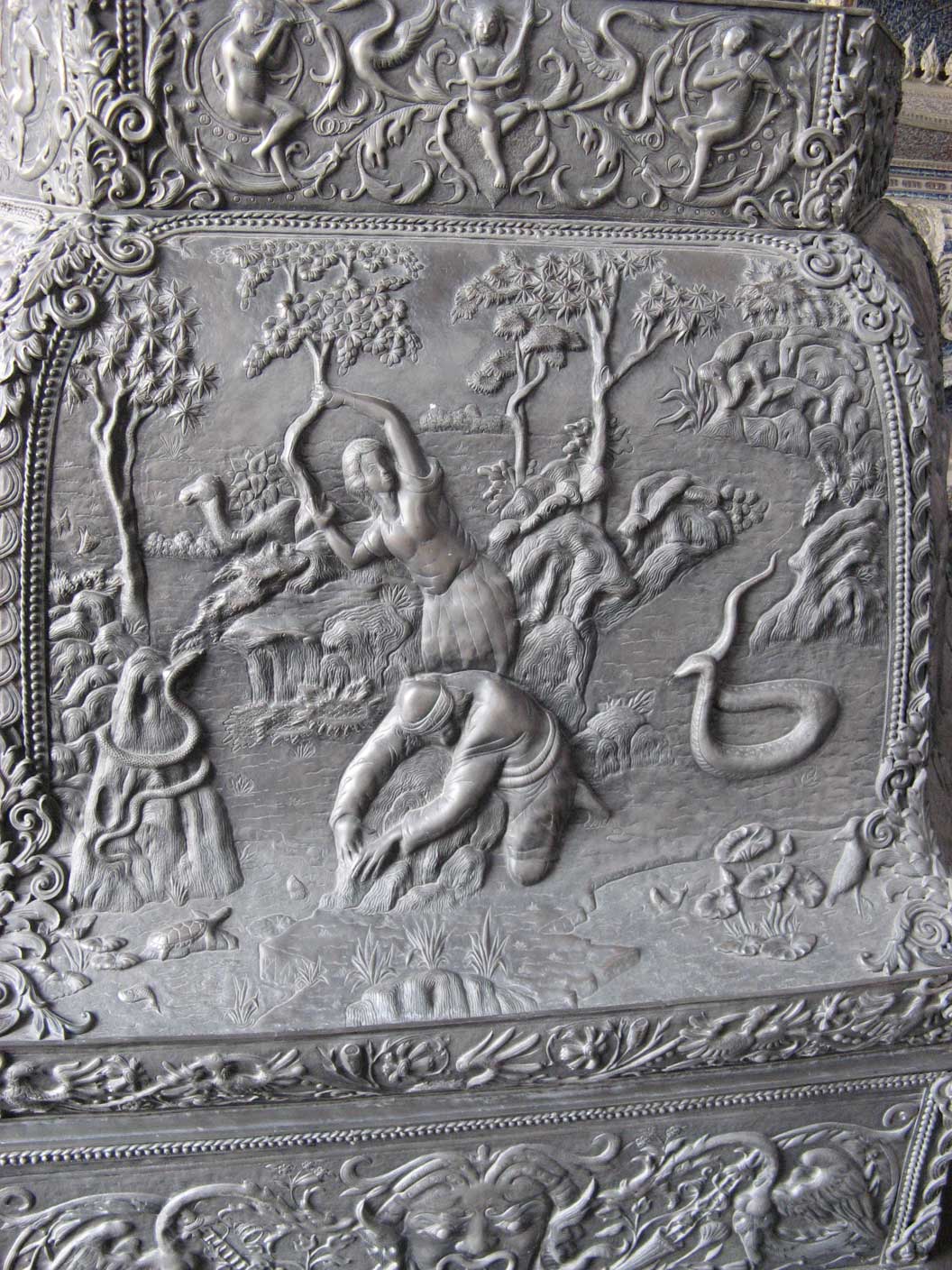
You begin by going down into the base of the structure, where the underworld is represented alongside the framework of the museum itself. This space displays a wealth of antiques, period furniture, and objects of Thai and Chinese origin.
The hall representing the human world contains antiques from both East and West.
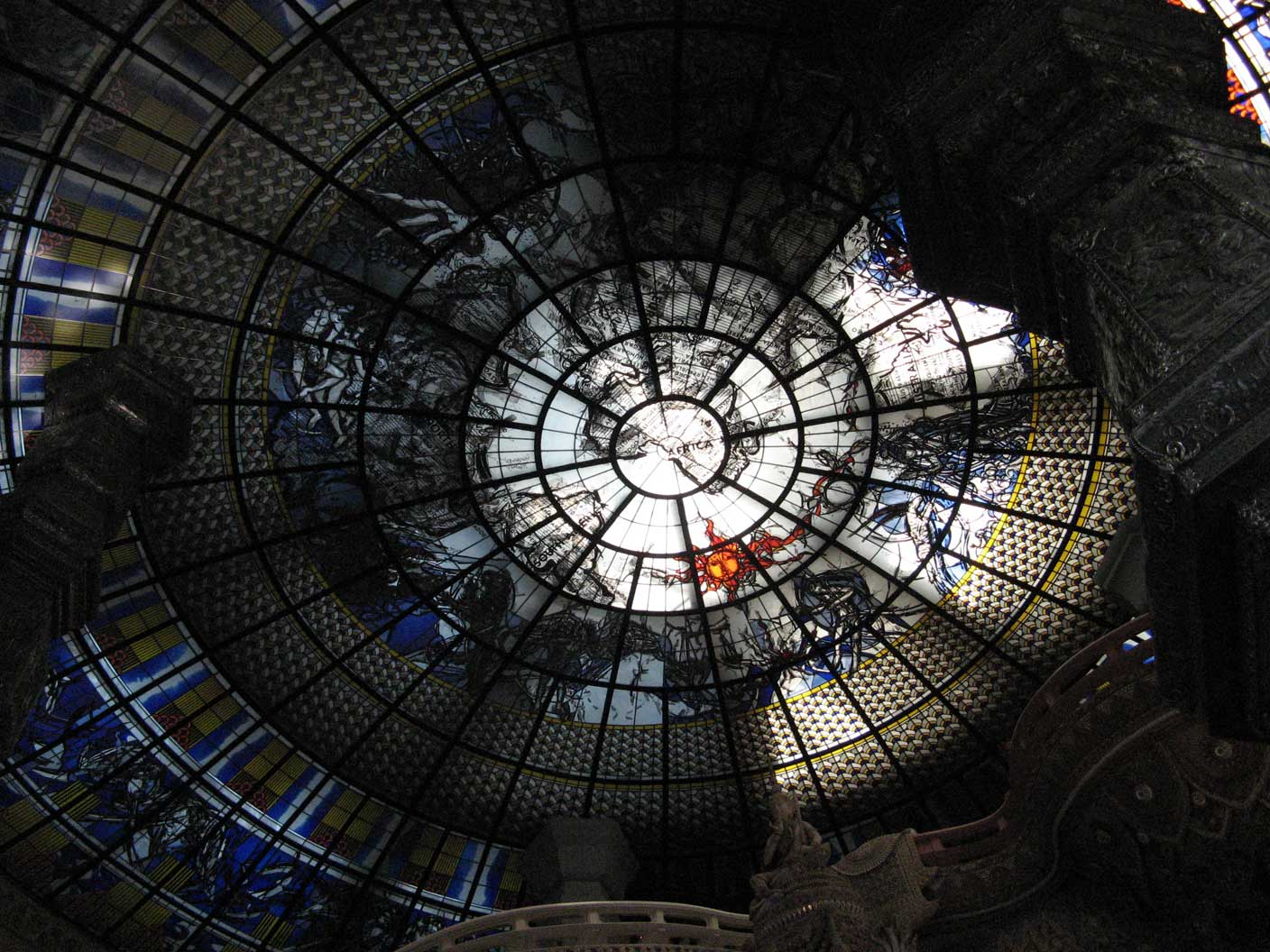
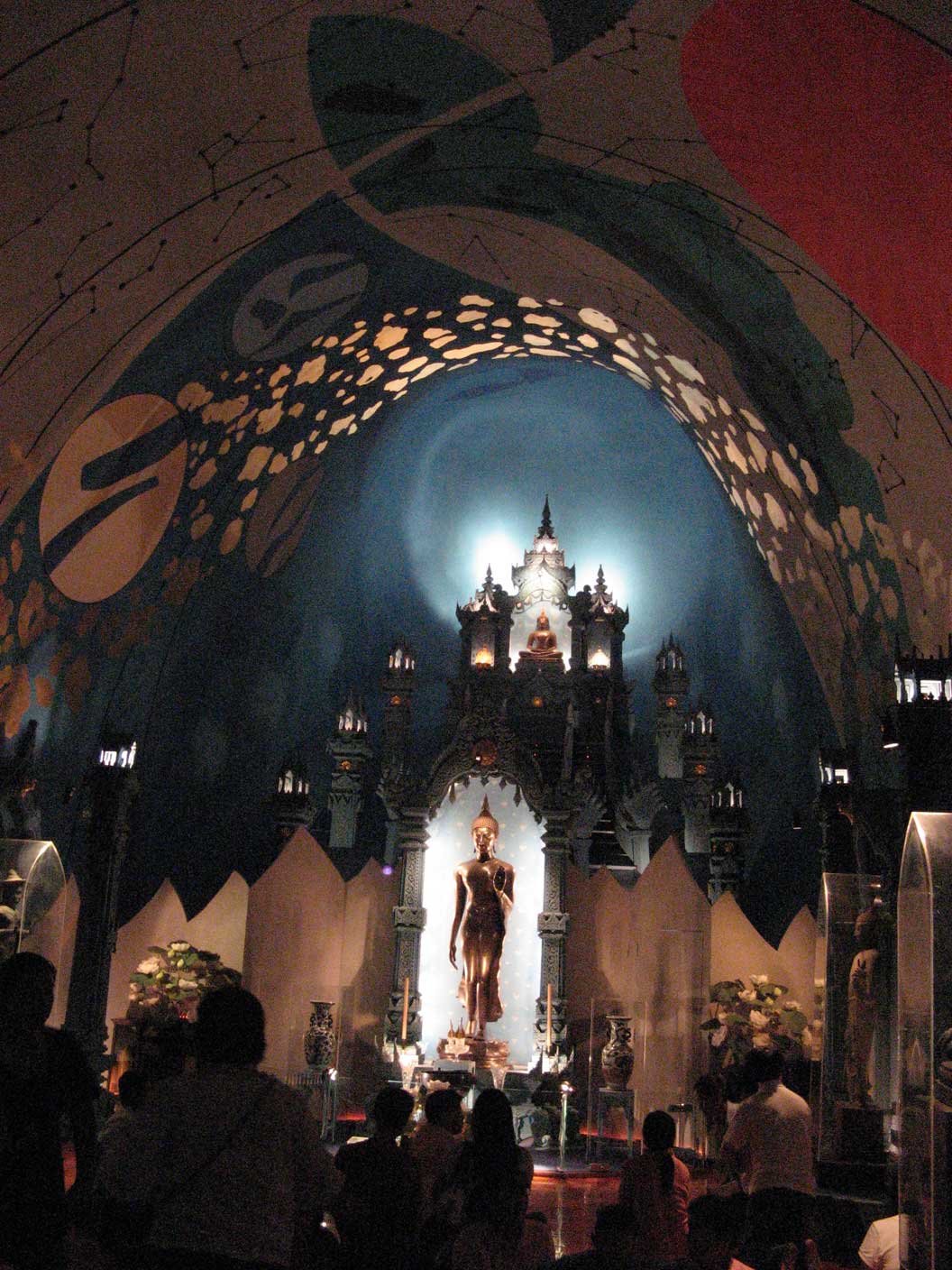
It's genuinely striking: a deep blue dominates the ceiling and walls, painted in tempera and representing the solar system.
This section, though its colors are quite intense, struck me as truly beautiful.
The construction was left to Mr. Lek Viriyapant's son, Khun Paggean Viriyapan, but both of them died before seeing the work completed.
The story goes that the idea came to Lek Viriyapant from a Westerner, who at the end of a visit suggested it would be wonderful to build something representing what matters most in this city, and that it should take the shape of an apple, since in the Western world the apple is said to represent the formation of humanity.
But Mr. Lek Viriyapant felt that an apple wouldn't speak for the Asian world, and so he decided on the elephant Airavata (Airawata) from Hindu mythology. He thought a three-headed elephant would symbolize something far greater than simply being the vehicle of the god Indra (god of battle in the Vedic culture of India). 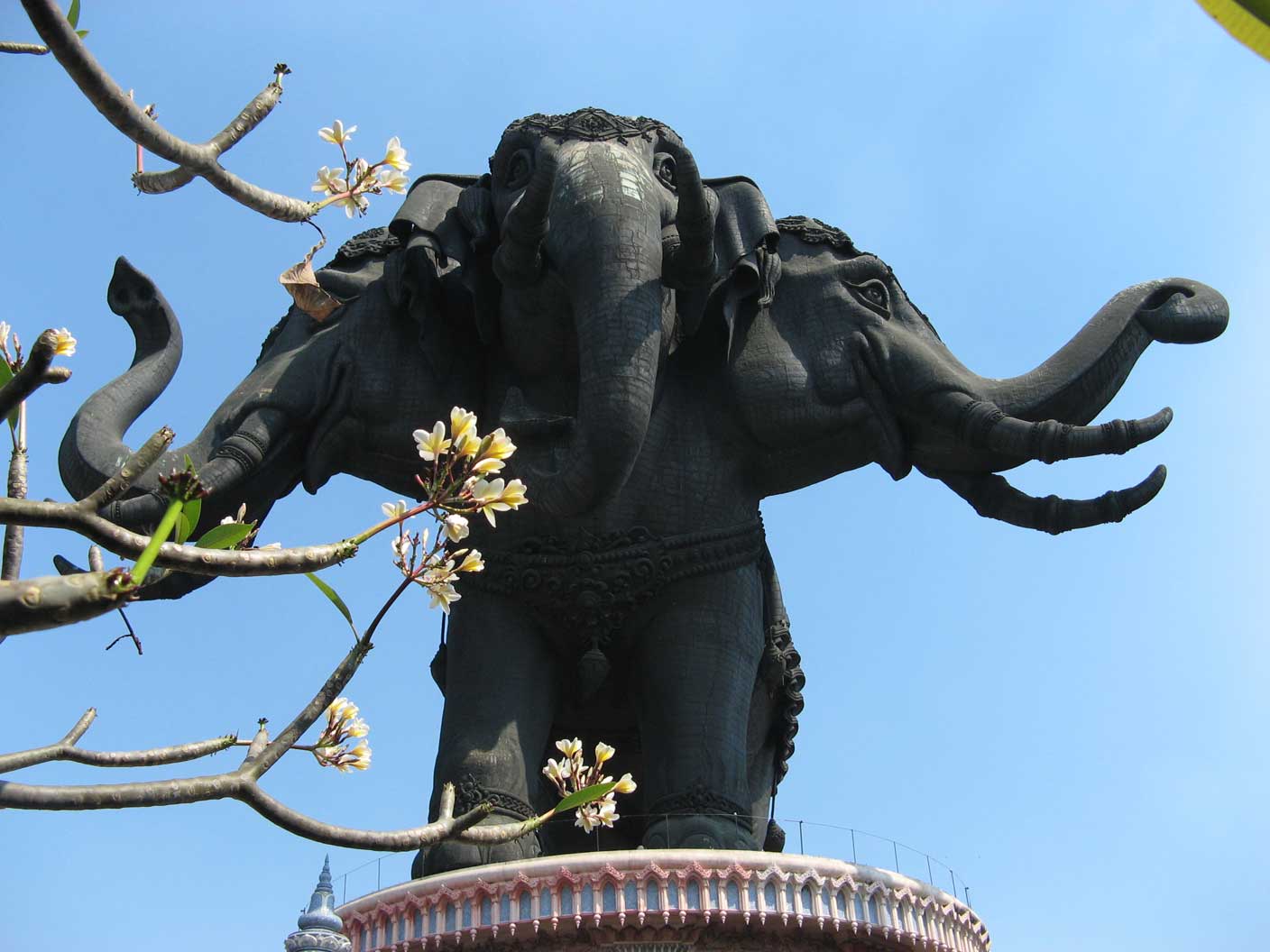
And so the elephant would become the symbol of the center of the universe, allowing the building to function symbolically as the spiritual heart of the earth, a place where its sacred things might be kept.
I found the concept genuinely interesting, if a bit kitsch, but well worth seeing.
This is the page where you can find a map to the museum and some details, though the explanations are in Thai:
Highly recommended if you're in Bangkok. Enjoy it.
Sanuk
Comments (1)
Saludos Juan... Me da mucho gusto que sigan con su aventura. Desde Sonora Pedro Campa
New comments coming soon.