Just arriving in Chalma, images and memories flooded my mind, because we have been to this place dozens of times over the course of our not-so-short lives.
Everything the same as always, though we had never decided to come on a Sábado de Gloria (Holy Saturday) the way we chose to do this year.
Chalma is a town in the State of Mexico, about 60 kilometers along the Mexico-Toluca highway, turning off at La Marquesa (a recreational park or ecological reserve). It takes a while to get there, and even longer on a day like the one I'm describing, with too many people spreading out into the forest for picnics or heading to nearby towns to spend the day or several days.
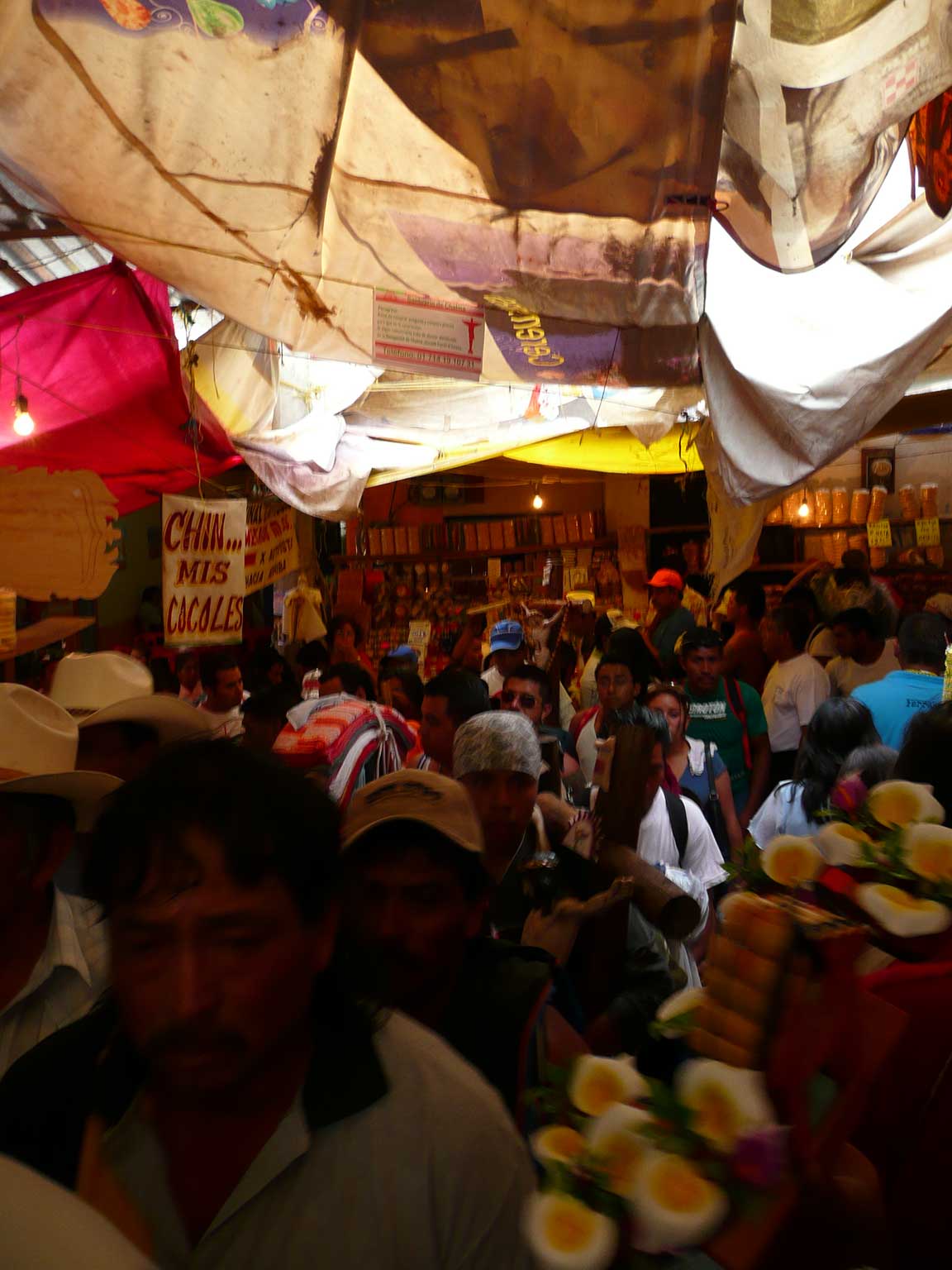
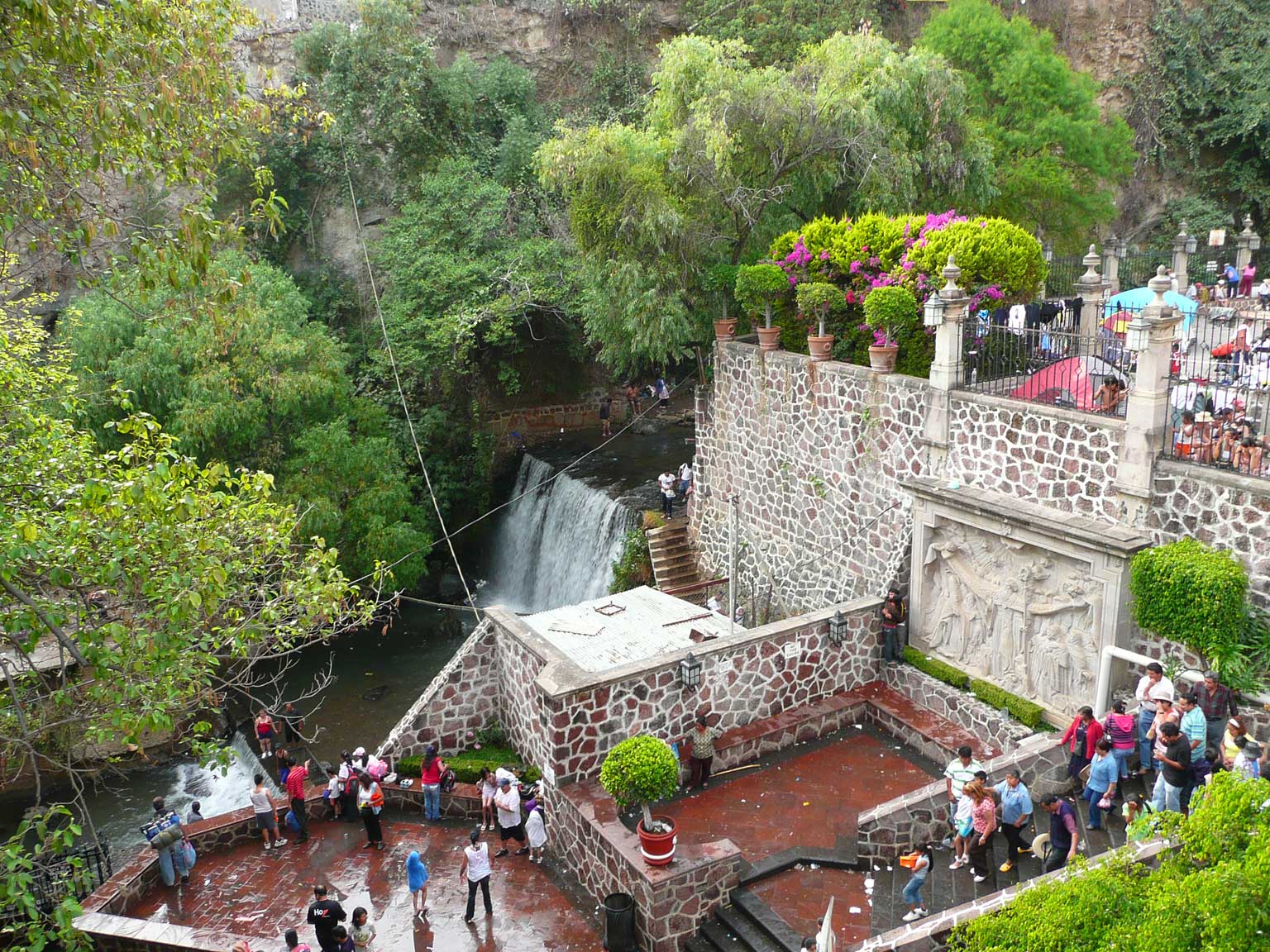
To reach the church, you are obliged to pass through all the market stalls lining both sides of the narrow, stepped path that leads down to it. You descend until you run into the church itself, very typical of a Mexican village, though nothing spectacular in terms of architecture.
Chalma is not a tourist destination, and you certainly won't stumble across any foreigners, because it's not the kind of place you visit unless you happen to know some of the local characters, or strange ones like us.
This church is visited by thousands of Mexicans from every town in this part of the State of Mexico, because the Black Christ housed inside is considered extremely miraculous.
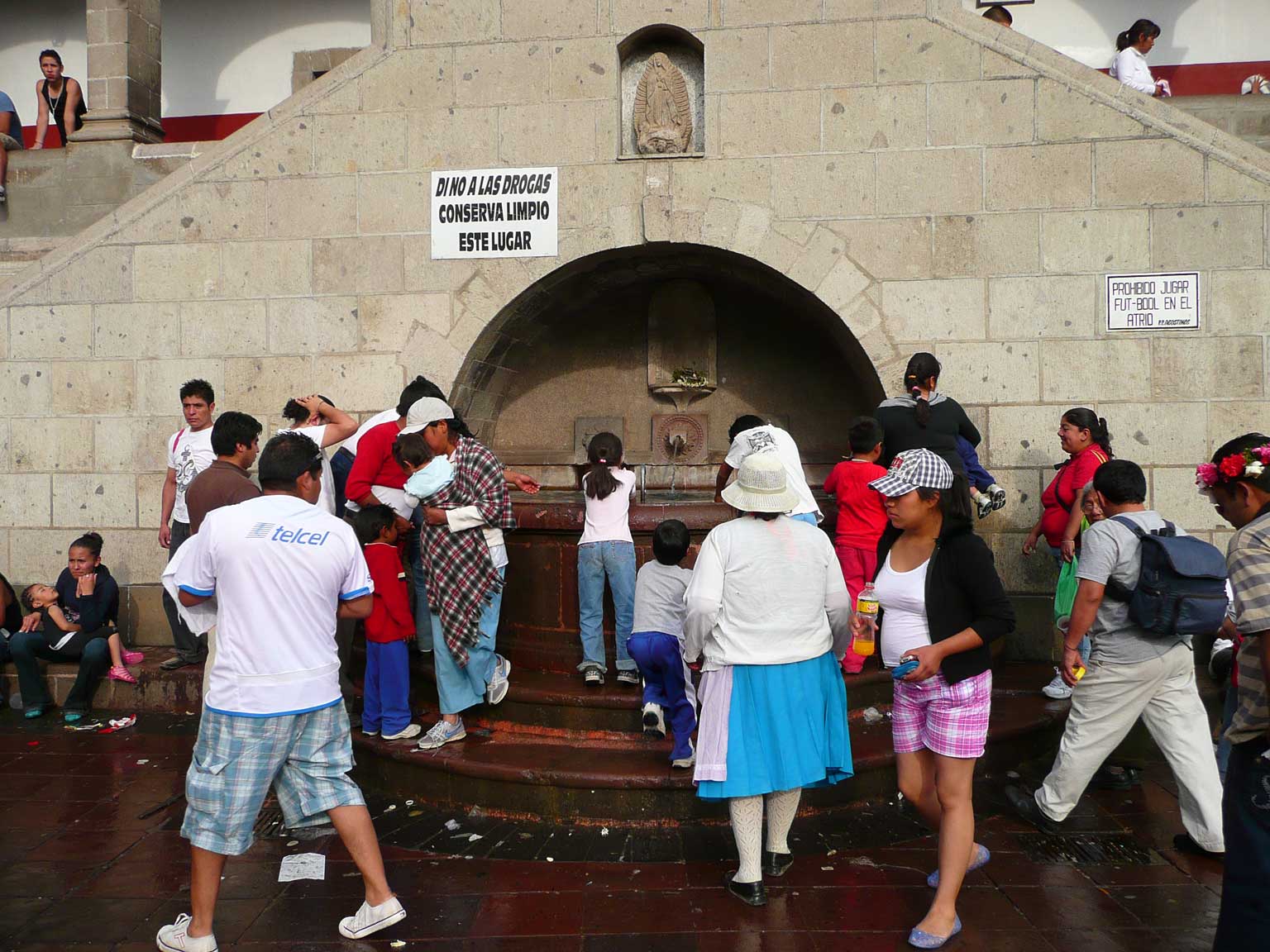
This particular day, falling as it did on Holy Saturday according to Catholic tradition (the religion practiced by roughly 90 percent of Mexico), is the customary occasion for a holiday spent "supposedly" carrying out religious rites, celebrating the Resurrection of Christ, and getting drenched with water. We were lucky nobody soaked us on our walk to the church, because most of the people around seemed to be shaking off the meditative stupor, or in some cases the excess of food and drink, that settles over people during these holidays. The days leading up to that Saturday are supposed to be sorrowful ones, marked by mourning for the Crucifixion, though for many others they're simply an excuse to join the celebration. Deep down I think it's all much more tradition than religion, but confusion always reigns.
Somewhere along the way I spotted a sign that read: "HOLY DIRT FOR EATING." I found myself wondering whether anyone actually buys this, and whether it really is dirt, or simply some food like pinole (toasted ground maize) that has been baptized with a pious-sounding name.
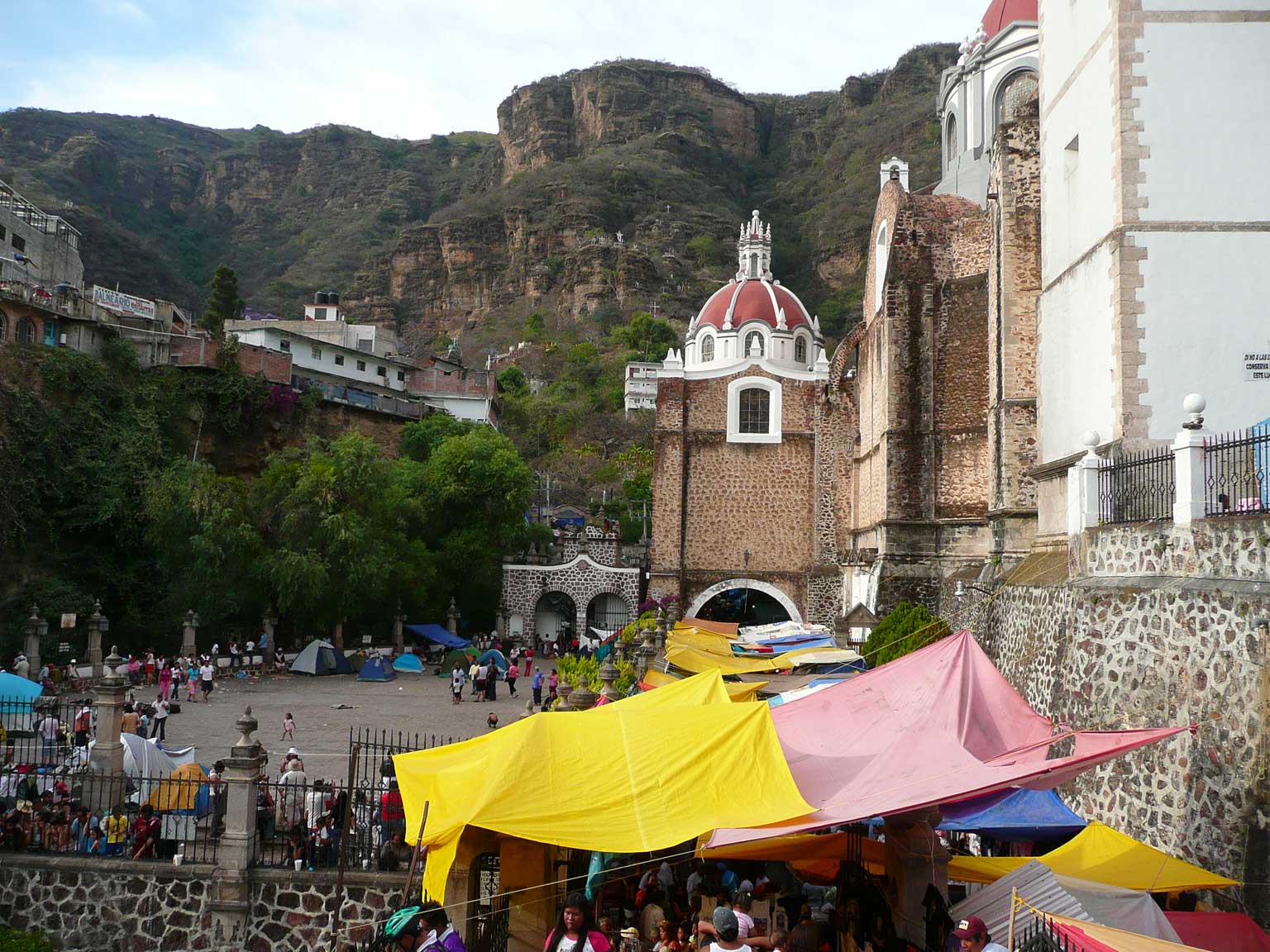
Faces worn with exhaustion, carrying a certain satisfaction at having fulfilled the rites that the Church has instilled in my people. One restaurant bore the name: "THE PILGRIM'S SANDAL."
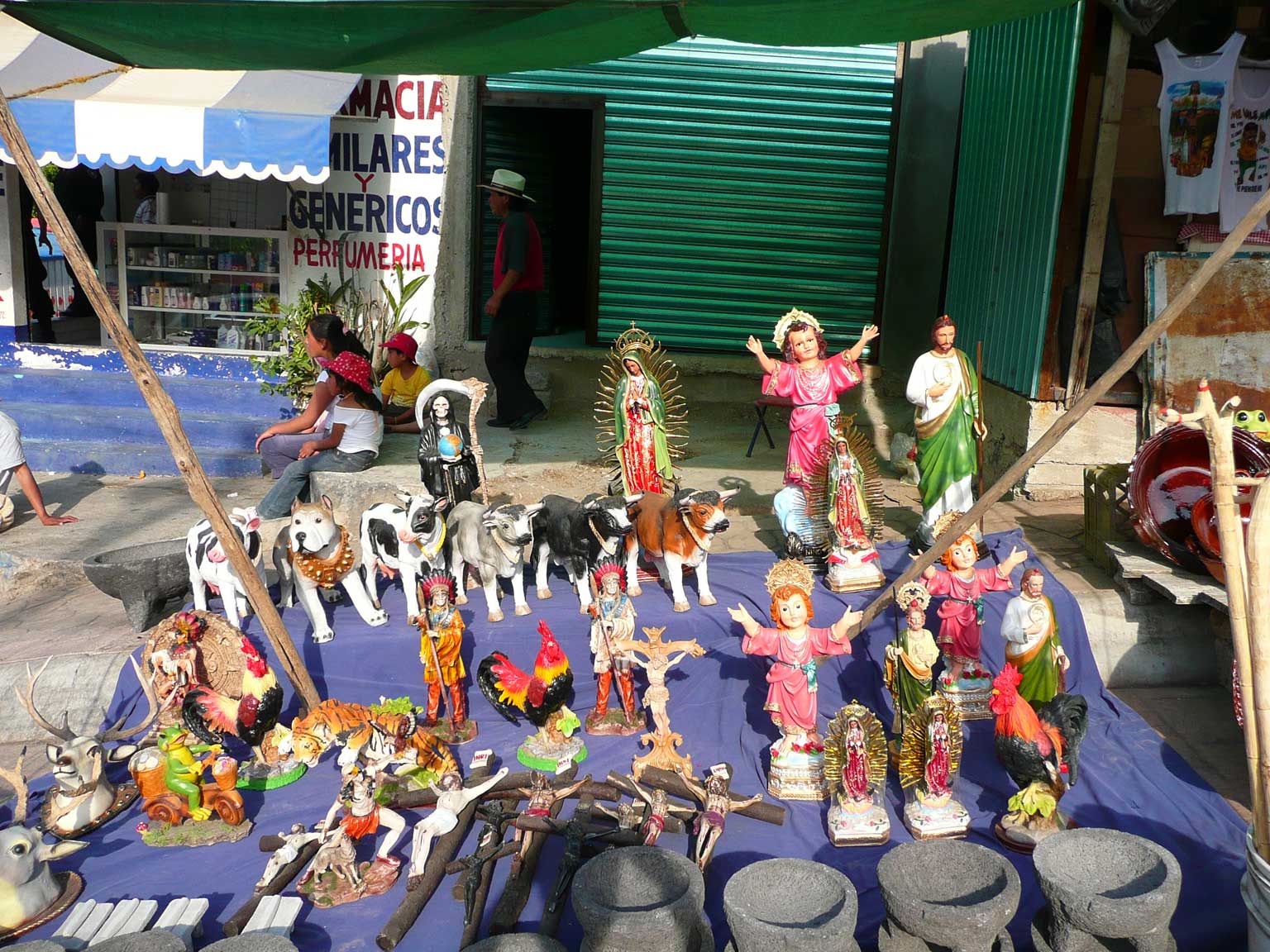
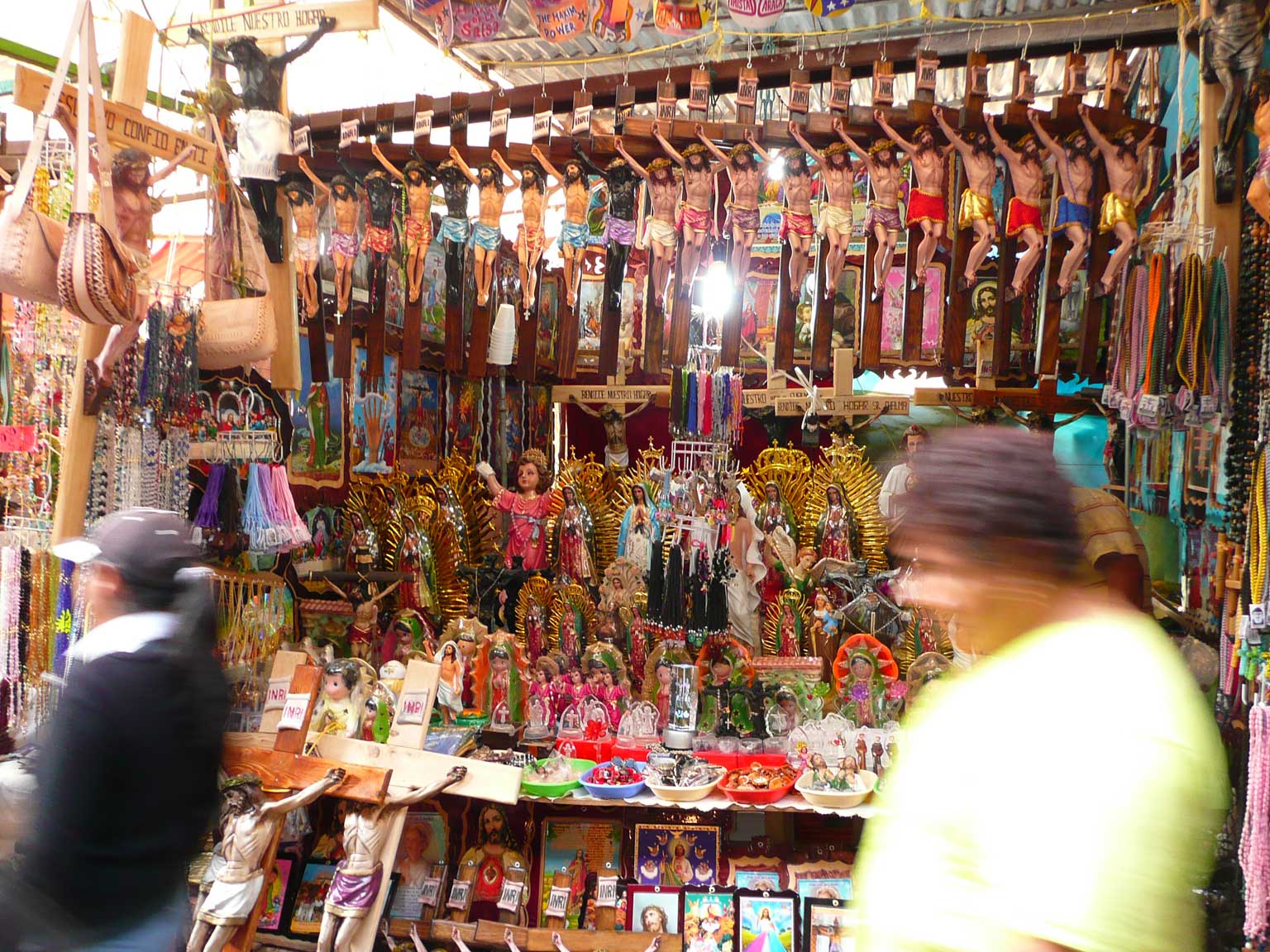
And there is never any shortage of amulets of every kind, from the Catholic to the Oriental, the latter arriving today amid a confusion also worthy of serious sociological and anthropological study, bringing hope to a people who, given their history and the weight of what they haven't been taught, need so much of it.
Two young men in particular made me laugh: one of them with a mojo hairstyle (head nearly shaved but for a few gel-stiffened spikes rising from the center), an earring, a tattoo, wearing his crown of thorns as one more way of demonstrating that he can take pain better than the next person.
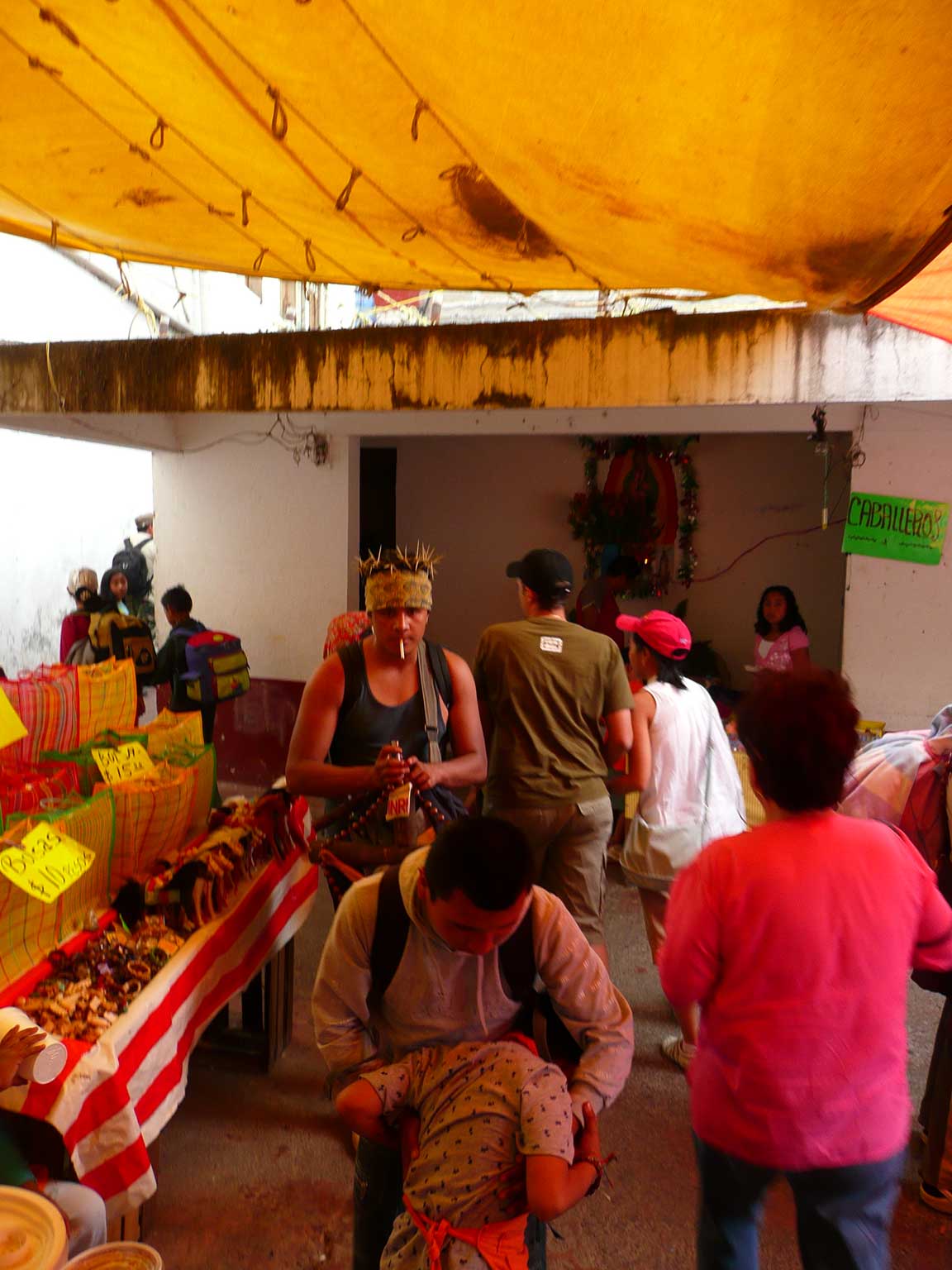
Fortunately, the thorns on these crowns barely seemed to graze their wearers' scalps, so there was really nothing to feel sorry about, which is decidedly not the case for those who flagellate themselves in other parts of the country, including the famous Villa de Guadalupe. But the Mexican people remain deeply religious and deeply traditional.
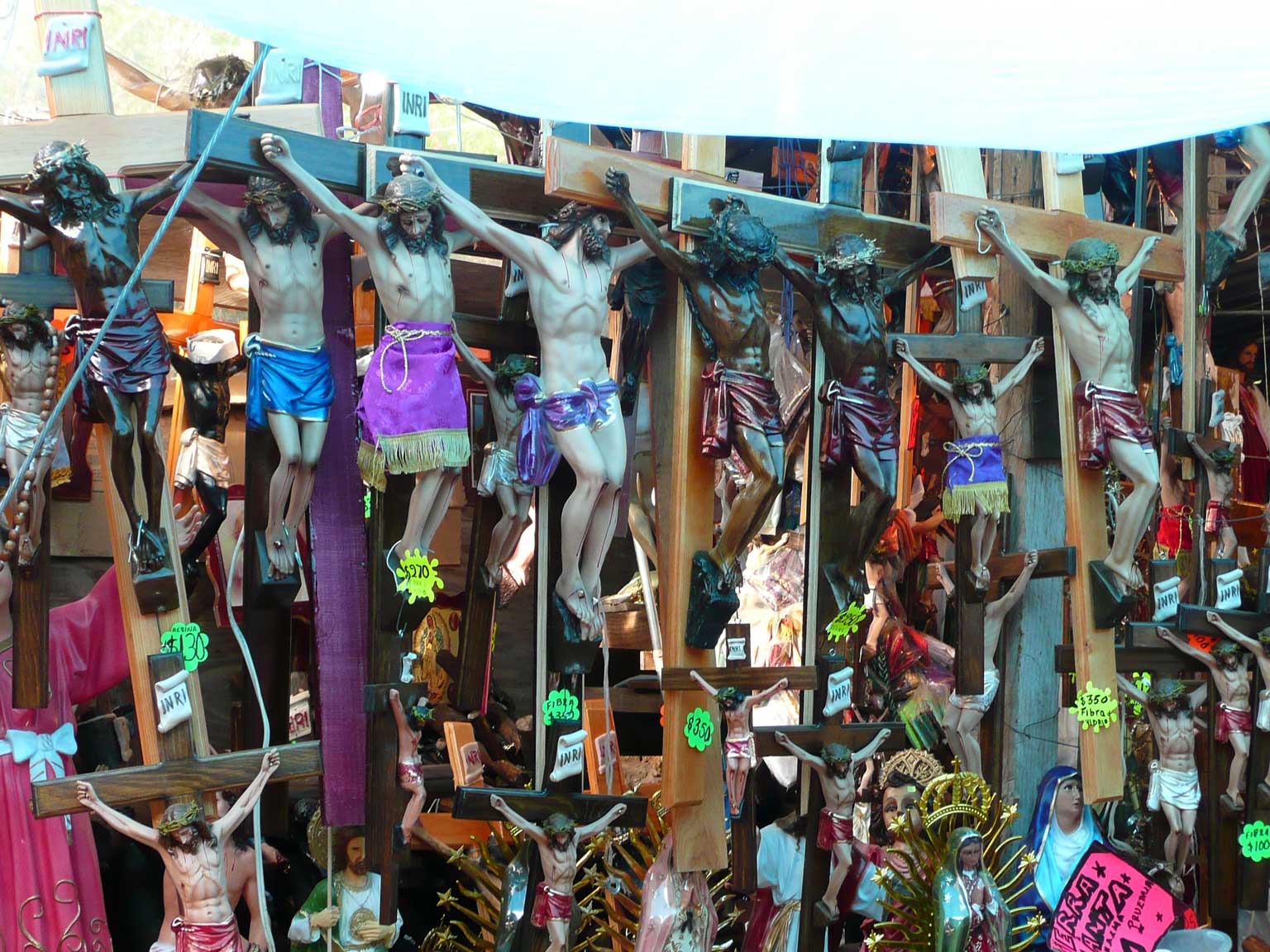
The colors on display are enormously entertaining, along with the stalls hung with crucifixes that dangle like charamuscas de Guanajuato (typical Mexican sweets made from piloncillo, which is unrefined cane sugar used widely in desserts or eaten in chunks; the charamuscas can be molded into the shape of Don Quixote or other figures and characters).
The little angels, the Virgins in every color, size, and design, are a whole creative universe unto themselves. But what's most delightfully absurd is finding, right next to them, a Native American from the North American plains in full headdress, bow and arrows in hand. They share their shelf space with stuffed animals of every variety, kittens, puppies, bears, dolls with angelic faces, cartoon characters.
And there are always sweets and fried foods, their smoke wrapping around everything, making you aware of smells and tastes before you've even decided to eat, and probably affecting the clarity of photographs.
We left the church with great difficulty, fighting through crowds and the general chaos that results from the town authorities' complete failure to coordinate anything, and so, though we wanted to stop and see the famous Ahuehuete tree, from whose branches superstition has long invited pilgrims to hang all manner of objects, we couldn't get out of the car because there was simply nowhere to park.
In that moment, courtesy of the crawling traffic, we were able to get a good look at the tree, which had lost most of its folkloric charm because there was almost nothing hanging from its branches anymore.
They must have cleaned it at some point and now prohibit people from hanging things on it so as not to damage it, which seems perfectly reasonable to me, though it used to be absolutely fascinating to see it loaded down with objects: umbilical cords from newborn babies, shoes, socks, and all manner of curious things I can no longer recall in precise detail.
We said our goodbyes with the car thoroughly soaked from the buckets of water that baptized us on the way out, the laughter of those who threw them mixing with our own surprise.
I don't know when we'll return to Chalma, but it is a very interesting excursion that few Mexicans of higher or even middle economic standing dare to make, out of a fear that keeps social, ethnic, and economic classes as far apart as they were in the colonial era. It makes me think of India, since many Mexicans who have traveled there (precisely because it feels distant and exotic to our eyes) come back depressed by things that so closely resemble what is right here in our own country.
Sanuk