A notebook that started in Bangkok twenty years ago and continues, now from Cambodia. Travel notes, conversations, readings that stay, and whatever else fits in a notebook.Since August 2006 · Continues
Tepoztlán, Sacred Site.
by Asian Tao
June 11, 2008
English translation assisted by AI. The Spanish version is canonical.
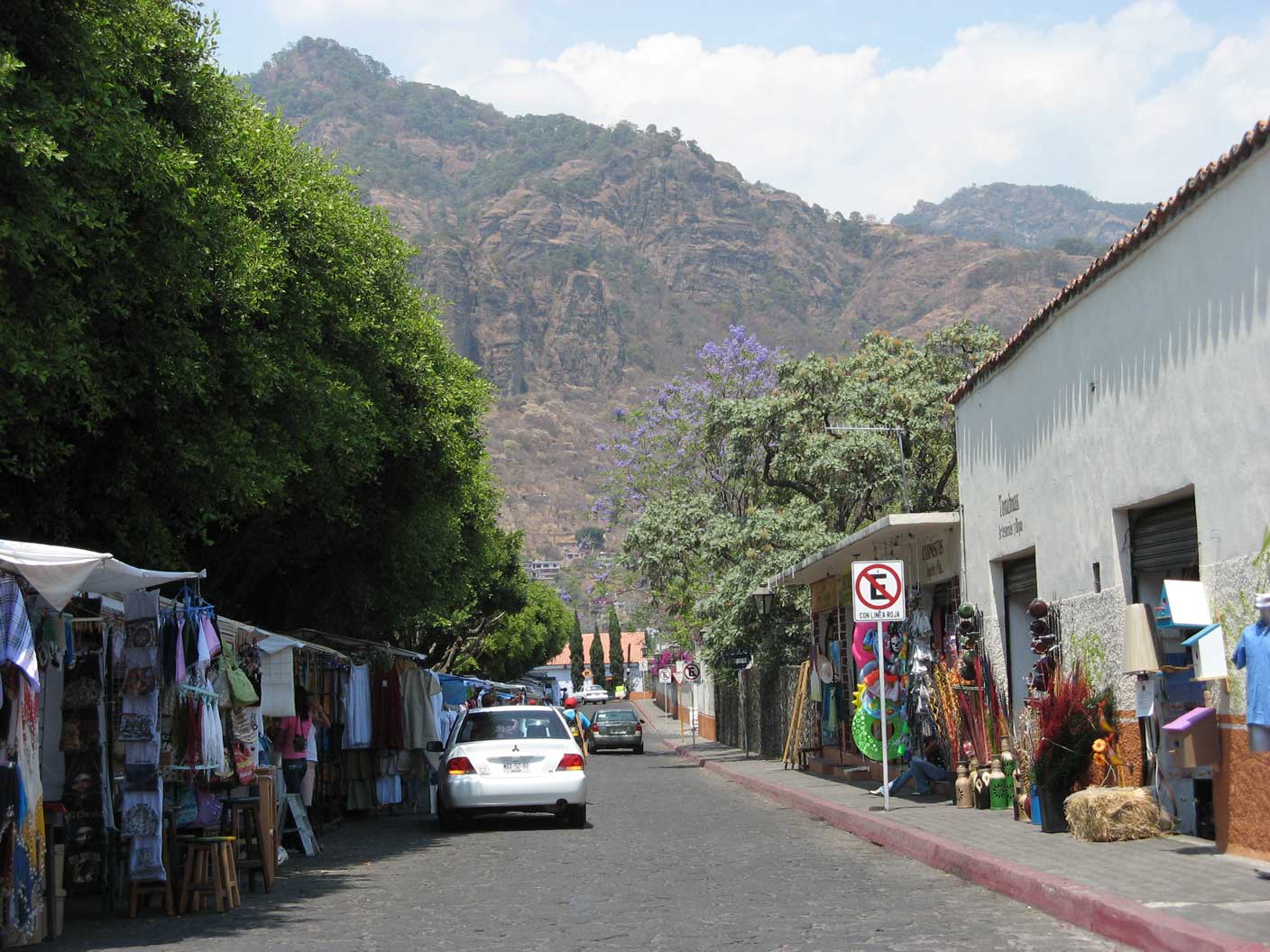
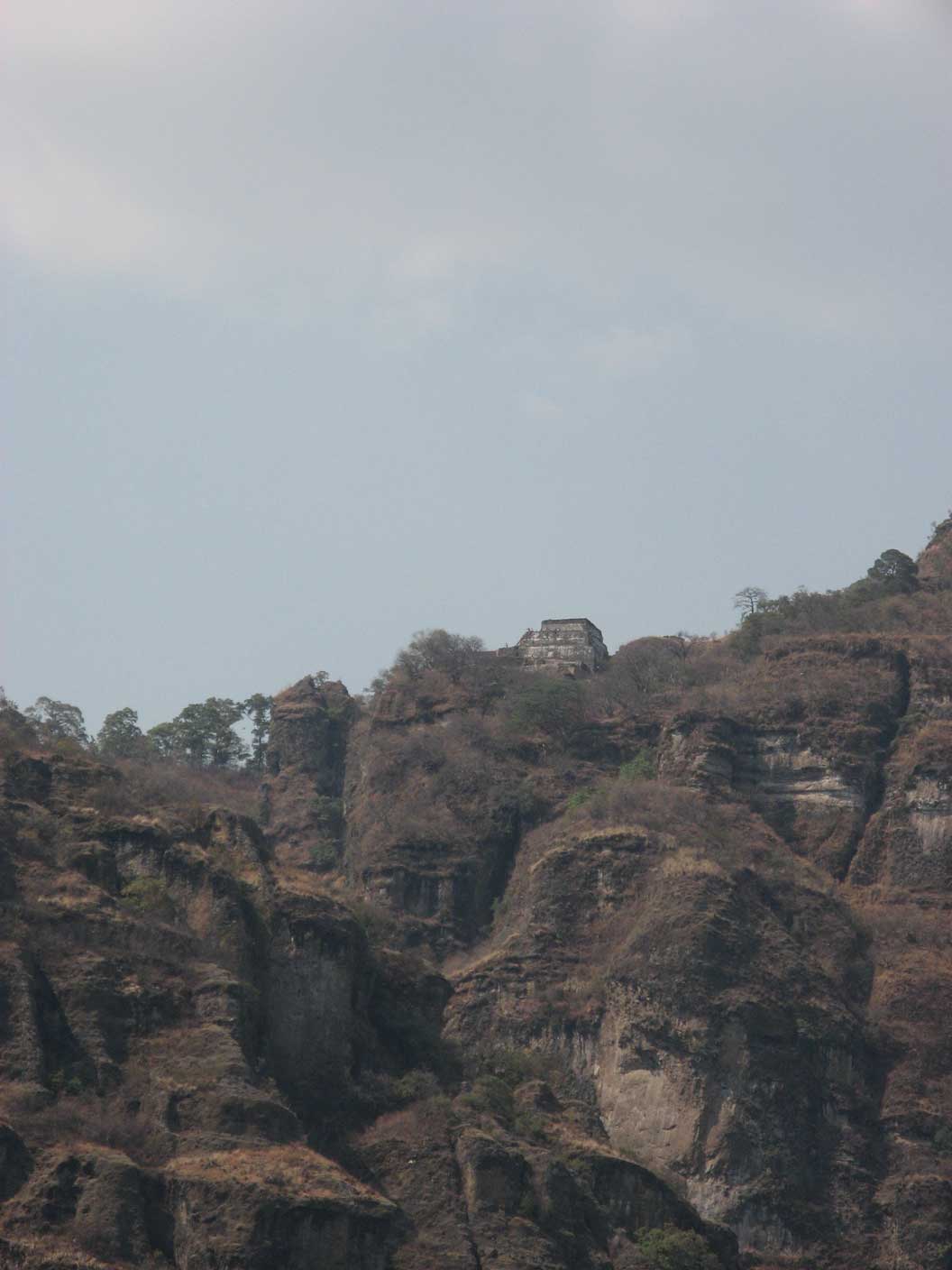
Very close to the city of Cuernavaca, just fifteen minutes by car, there is a town called Tepoztlán. It is a beautiful place that captivates us every time we go. It is ringed by a series of hills (the sierra de Tepoztlán), among them the one known as the Tepozteco. Several of them, almost entirely bare of vegetation, rise in formations that are genuinely remarkable. The photographs you can get of them can be spectacular. Many people come here to hike and climb.
In the town itself, thanks to the fact that the people are fierce and in many cases even outright combative, no hotels, golf courses, or any of the usual machinery of modern tourism have managed to take root. This, naturally, always irritates the hardline capitalists and produces a steady stream of criticism from Mexico's moneyed class, though also from certain people of considerably less money (who foolishly believe they belong to that exclusive rich man's club) who argue just as loudly in the name of the economic progress these projects are supposedly going to deliver. I have always wondered whether that kind of progress really deserves the name.
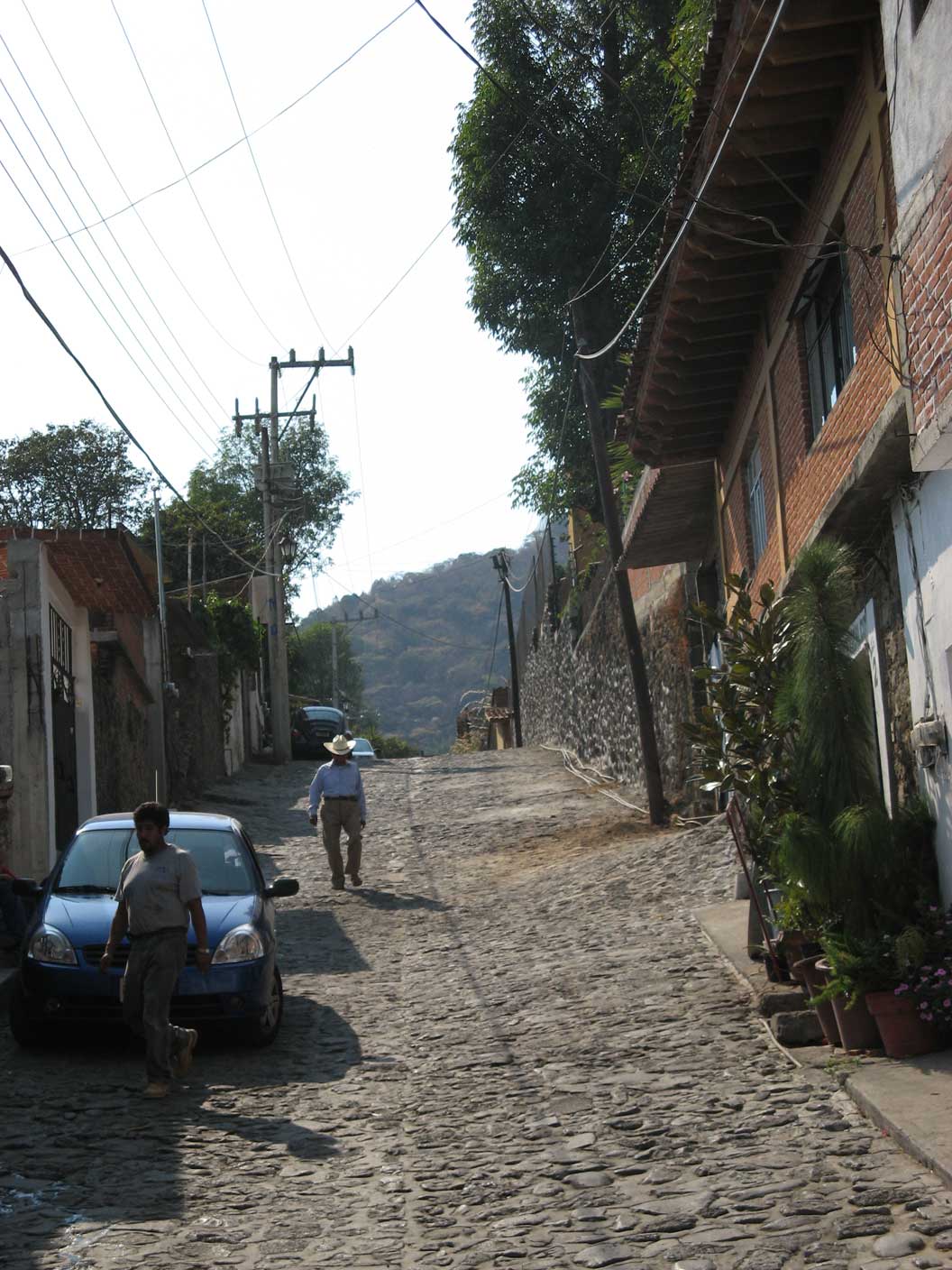
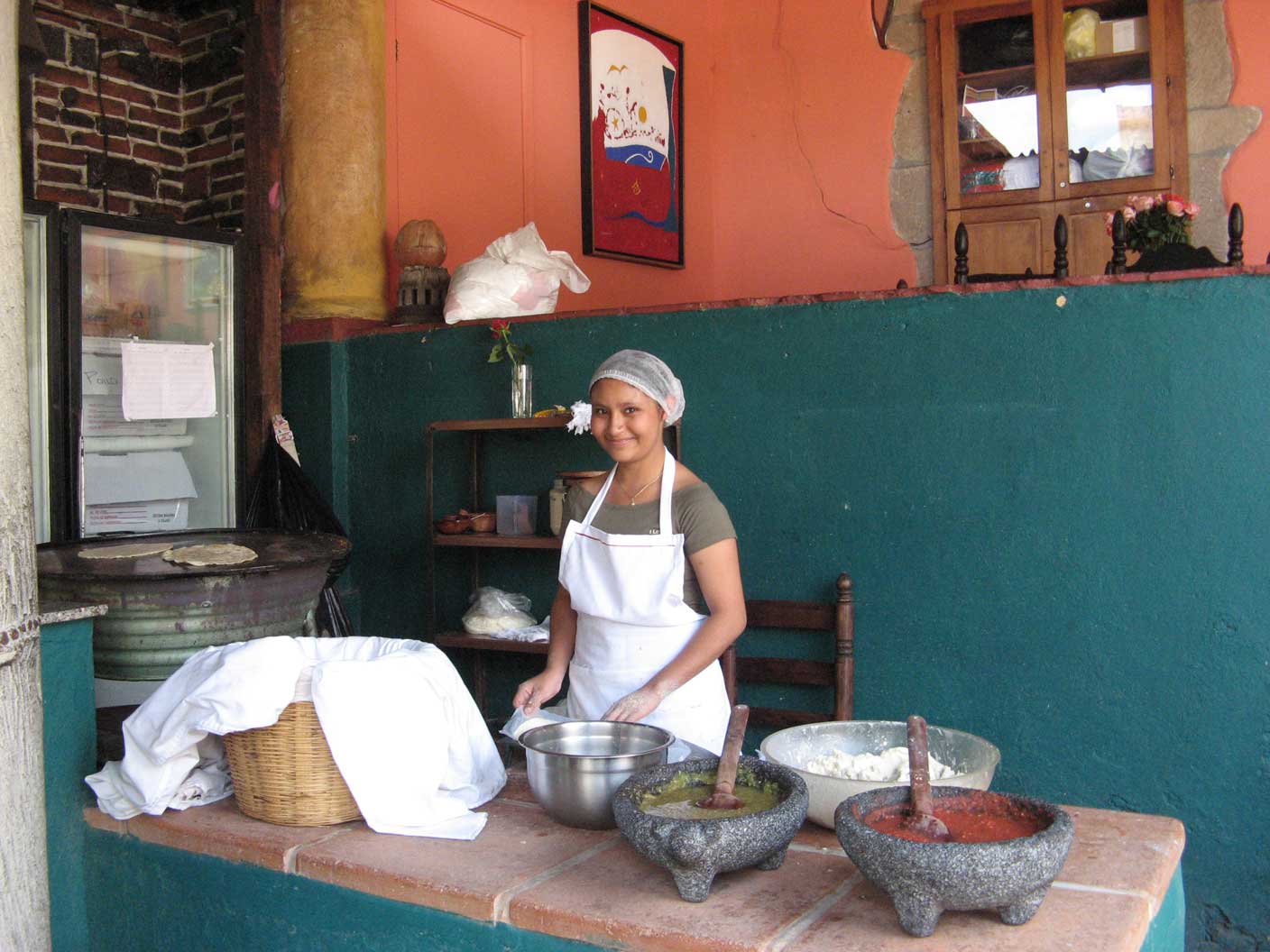
The truth is that the town has kept itself genuinely, authentically Mexican. There are no tall buildings, no chain restaurants or transnational franchises. The people are highly politicized and defend their rights against all comers. The food is entirely Mexican in its preparation and flavor, which means you have an enormous range of culinary options. Mexican food is extraordinary (and I say that knowing full well I'm Mexican) and in Tepoztlán you can sample many dishes without spending a fortune, provided you choose your spot with a little care.
The place has a kind of real magnetism, born from the way those enormous crags wrap around it and create a sensation of being enclosed, which in turn generates an energy you can feel in the air. Many people climb the Tepozteco to recharge, and it is common to find, up on the hill where a pre-Hispanic pyramid sits, people meditating or simply seated in postures of relaxation and contemplation. Most of us who come to this place are looking for something, whether it be a certain esotericism, a kind of spiritualism, or simply a respite from the metropolis, which tends to be overwhelming in so many ways.
Juan and I are always tempted by the idea of staying a while and living a few days at the pace of its inhabitants. Simple people who stand in stark contrast to the opulence hidden behind the high walls of certain mansions, an opulence that can feel almost obscene to those who have barely what they need to get by. And yet, thanks to the character of its people, Tepoztlán keeps arrogance in check, creating an atmosphere that (superficially at least) doesn't grate the way other weekend-getaway towns near the city tend to. To understand this social incongruence, which nonetheless coexists (I'm not sure how peacefully, because the indigenous voice has yet to be raised very loud), I recommend watching the film recently produced by the great Mexican actor many of you will know, Gael García. The film is called "Déficit," and it portrays very well the racism that (invisible to the outsider) in my country runs more between our own people than toward those who come from elsewhere.
This is difficult to explain because we are a people that has not yet found its footing, living in a permanent state of confusion. The fact that so many Mexicans are descended from the union of Spaniard and indigenous, yet carry the legacy of the conquistador's contempt for the Indian, is something that has not been easy to absorb even after nearly five hundred years since the Conquest.
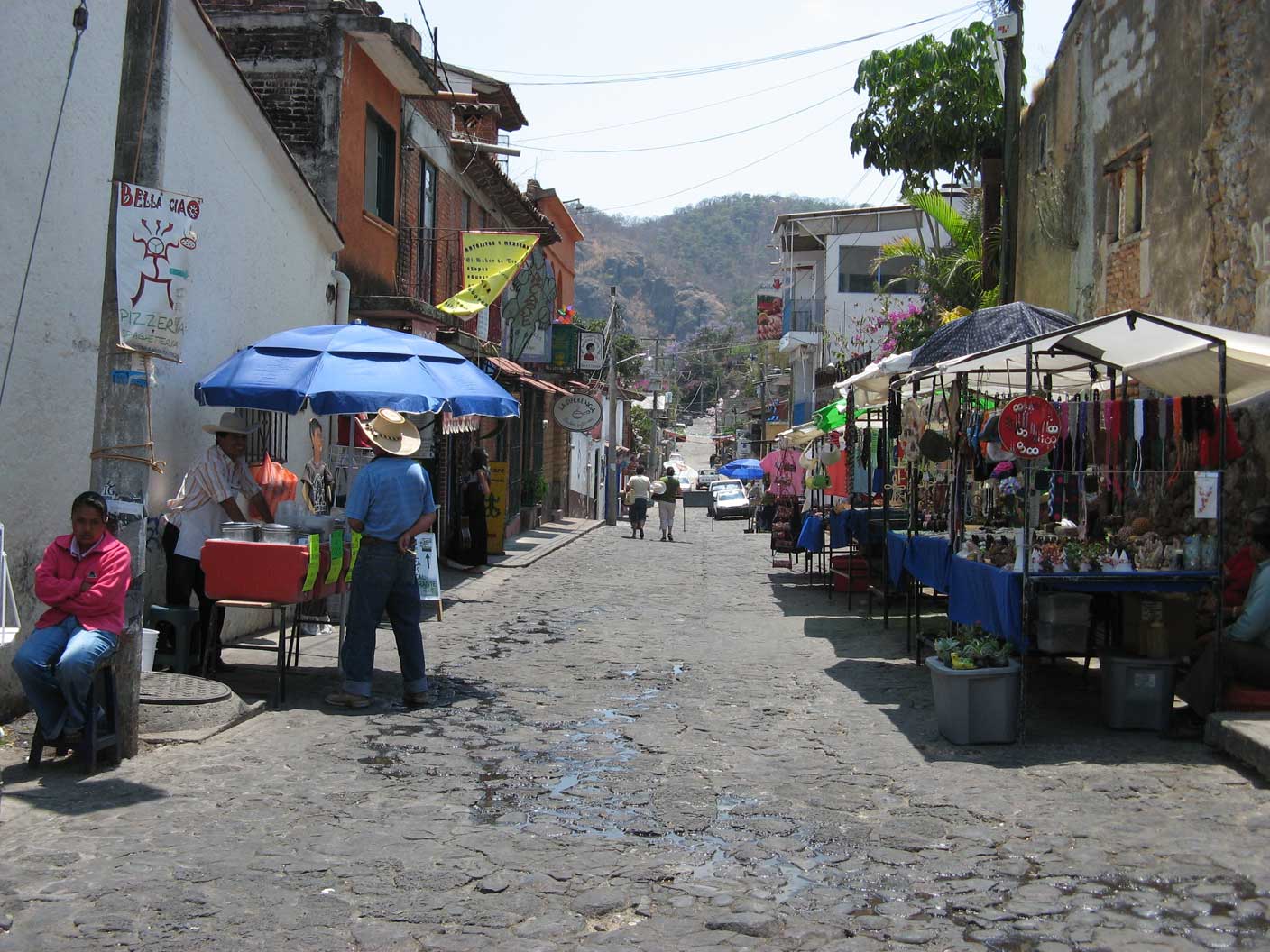
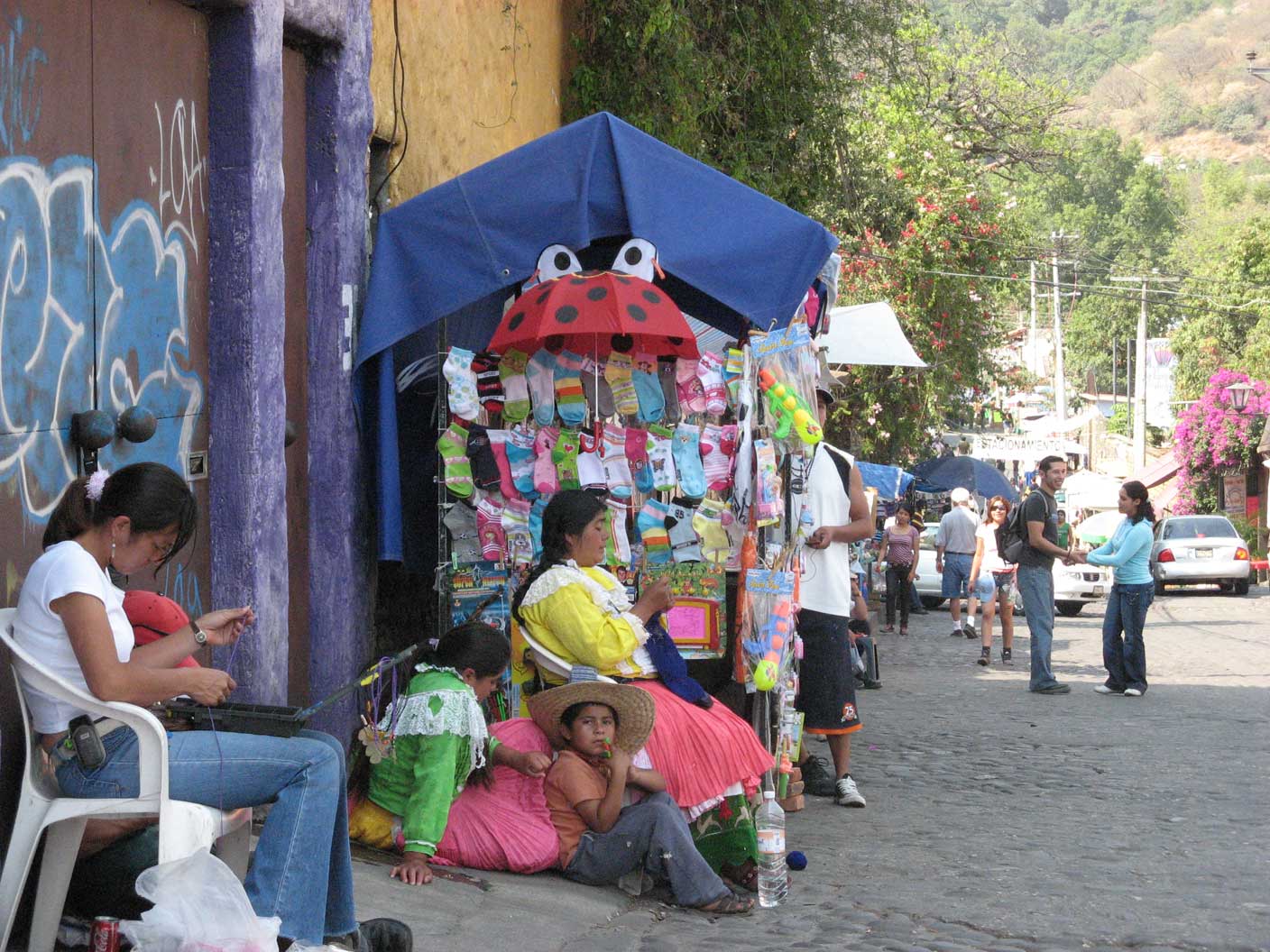
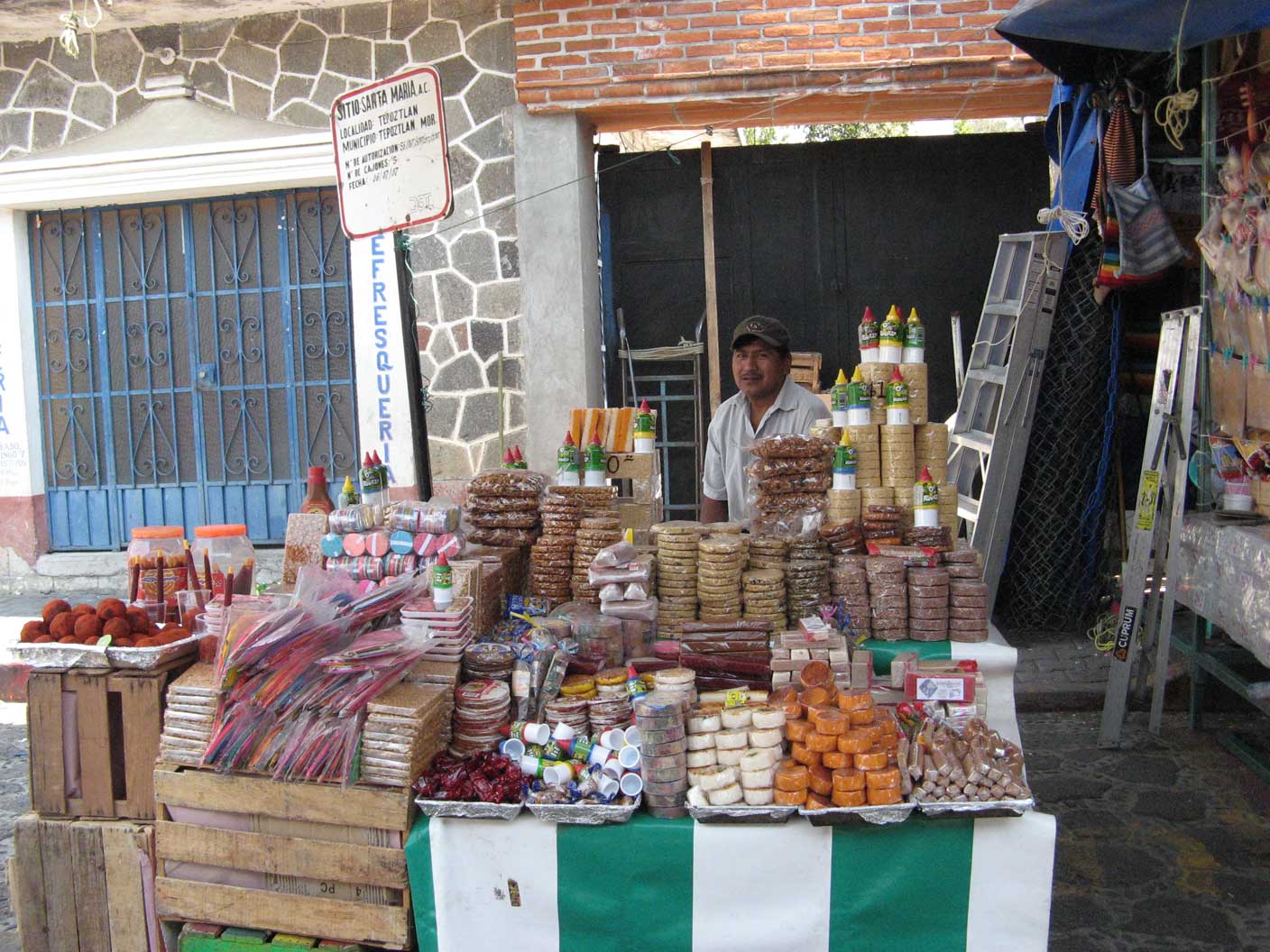
In Tepos (as many Mexicans call it), on Saturdays and Sundays a tianguis (a traditional Mexican open-air street market) sets up, where indigenous vendors and traders of all kinds sell their wares. The crafts are varied and beautiful, and the prices are very reasonable. Walking through the tianguis is an absolute pleasure. The typical Mexican street food is never absent, accompanied by sweets, fresh juices, and aguas frescas in every flavor imaginable.
The faces of the indigenous vendors carry an expression that is something like sadness, or resentment, or resignation at what will probably never change, and they are worth looking at, really looking at. These people, less mixed than those in the city, and eating a more balanced diet with far less junk food, are physically more striking to the eye.
Beautiful women with indigenous features, wearing traditional dress (or simply plain, unassuming clothes), make mine a truly bronze race. These men and women, their faces weathered by the sun and their bodies hardened by heavy work, don't allow themselves to go soft the way people do in other places. Interesting faces with deep wrinkles that, far from looking unattractive or inviting the urge to erase them, give each face the expression of a life genuinely lived.
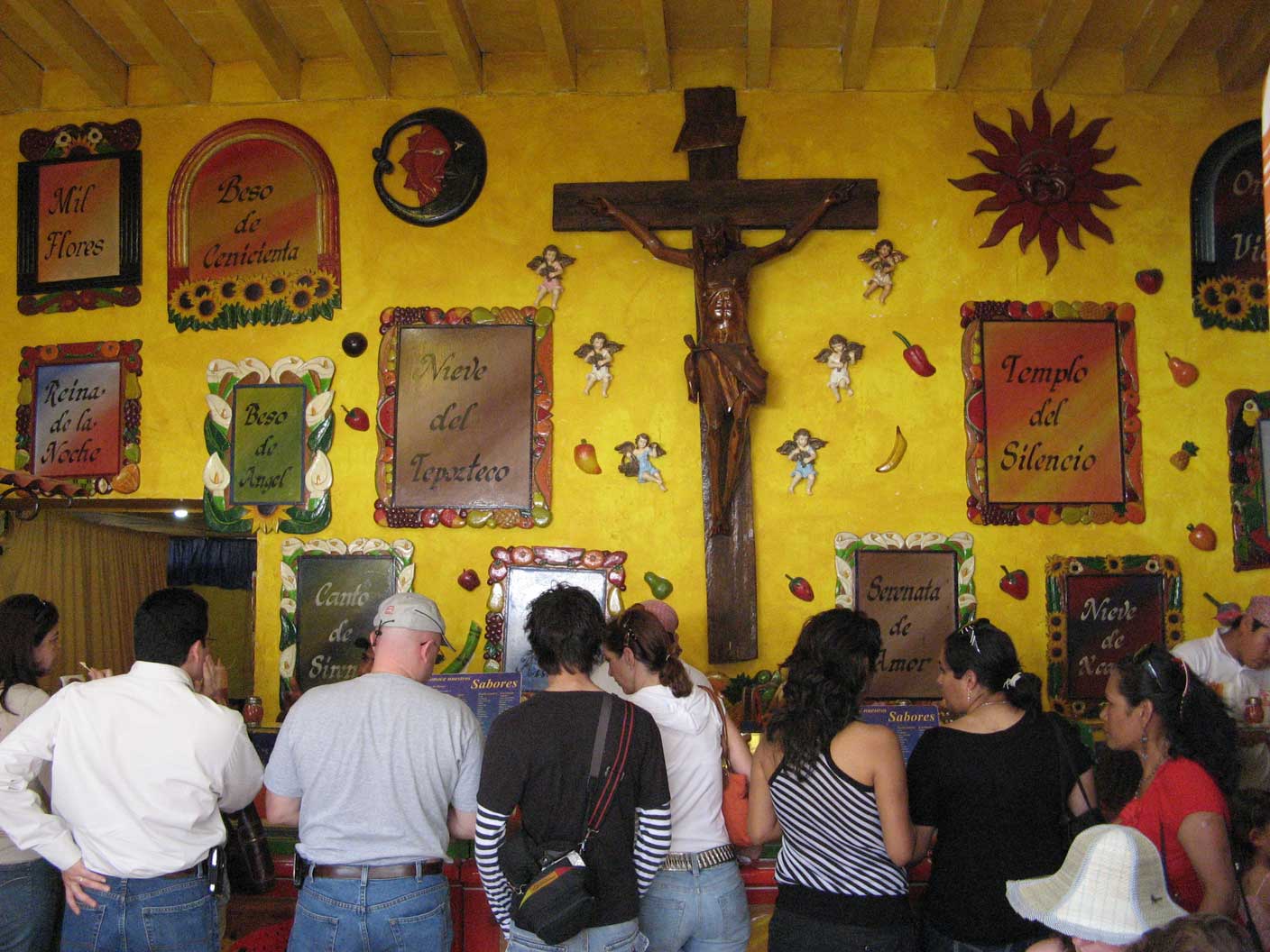
The fruit-flavored nieves (natural sorbets in extravagant flavors) are famous here. There are certain classic ice cream shops that are simply obligatory. And now we also find, as a newer development, that in addition to decent coffee at several spots, some places offer traditional Mexican chocolate made the old way and prepared in various forms. Natural and herbal products abound, alongside candles, soaps, incense, and aromatherapy goods of every kind. The town offers spa-style services. The small hotels, most of which have an unmistakably Mexican character, have their own temascal (a kind of Mexican sweat lodge, or sauna), and offer the full ceremony, conducted just as it was done hundreds of years ago.
These temascales are known as "the house of sweat," though their literal meaning in Nahuatl is "the house of the bath," from teme, bath, and cali, house. The Aztecs made great use of the temascal, not only for daily personal cleansing but as an effective treatment for certain illnesses, and in a much more layered sense, as a ritual ceremony of purification and initiation. The temascal, with its igloo-like shape, represents the womb of Mother Earth, and what one experiences inside it is, in some sense, a rebirth. The doorway represents the uterus through which we came into the world from our mothers, and entering again is a sacred act of returning the way we arrived. The dark, warm, humid interior holds and protects us the way our mother's womb held and protected us.
Comments (1)
Este comentario ha sido eliminado por un administrador del blog.
New comments coming soon.