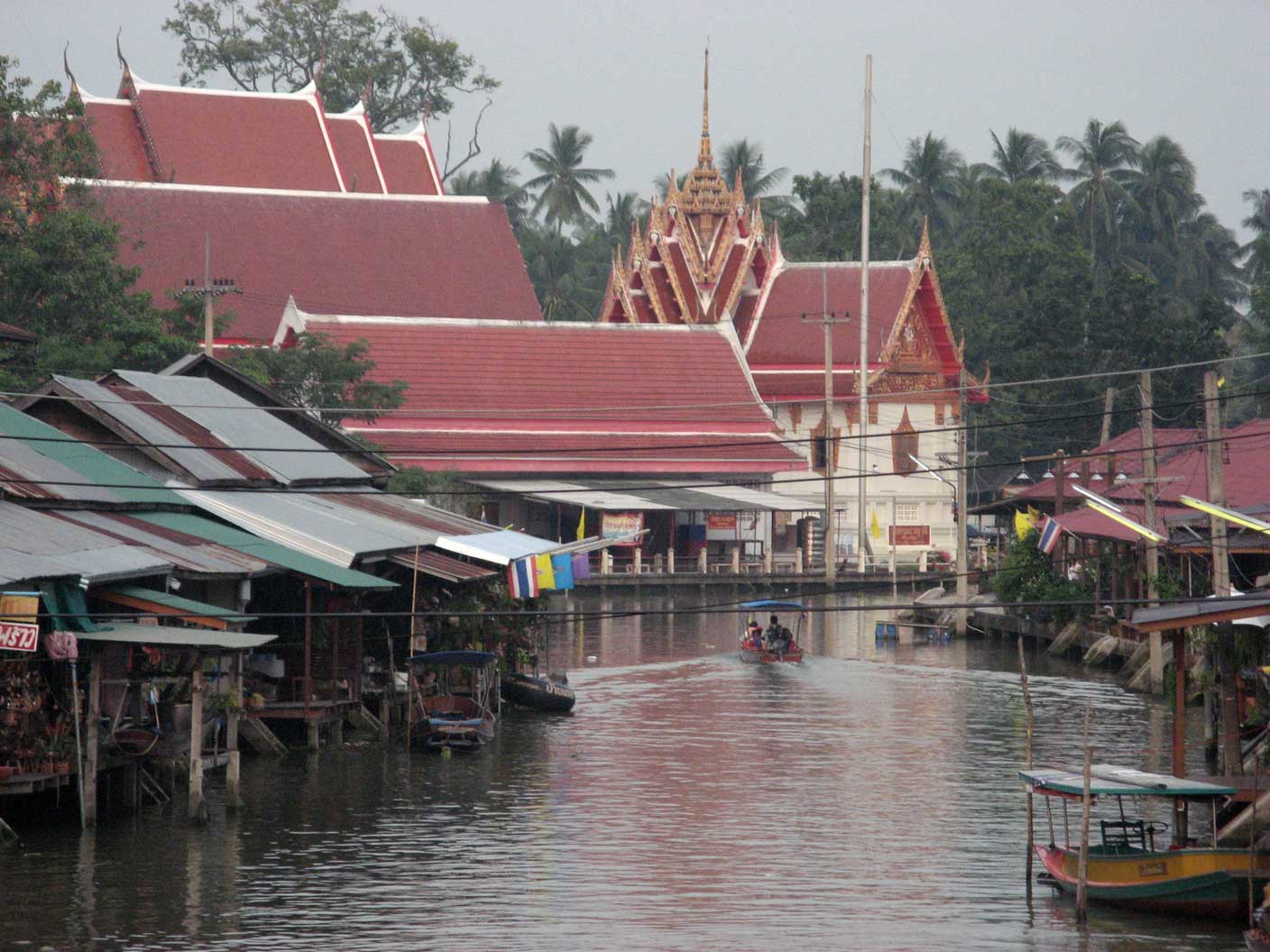
Just 74 km southwest of Bangkok, in Songkhram province and a few kilometers from the Gulf of Thailand, lies a place called Amphawa. This small town is built along the canals that flow into the Mae Klong River.
Our adventure begins with the departure from Bangkok. Because this place isn't particularly well known among non-Thai tourists, the instructions for making the trip are, to put it charitably, confused. Part of the problem is that the Thai woman who recommended it is our son's girlfriend, and since she goes everywhere by car she never takes public transportation for short trips near Bangkok, which makes her essentially useless as an advisor on that front. The way we behave inside our own culture often blinds us to the confusion we can cause when we fail to give precise directions. Not a single guidebook offered a decent explanation of how to get there, so we threw ourselves into the adventure proper.
Just finding the right bus stop to get us anywhere near our destination was already an adventure, because it turns out there are two bus stations in Bangkok for southbound routes: one old, one new. They have names that are nearly identical and they sit quite close to each other. Everyone in Bangkok knows the old one, which is thoroughly third-world in feel but overflowing with people; only a handful know the new one, which looks like an airport and is, for that very reason, somewhat desolate.
Since we'd planned the trip with a French friend (who speaks even less Thai than we do), we arranged to meet at what we assumed was the one and only station. The result: we ended up at the new one, she ended up at the old one. After several rounds of mobile phone calls in which whatever she was seeing clearly bore no resemblance to what we were seeing, we arrived at the conclusion that two stations existed.
Out of courtesy to her, since she'd come alone, we decided to go to the old station and take a bus from there that would also stop at the new one on its way out.
After nearly two hours on the road, because the driver moved at a leisurely pace and made several stops along the way, we arrived in Samut Songkhram.
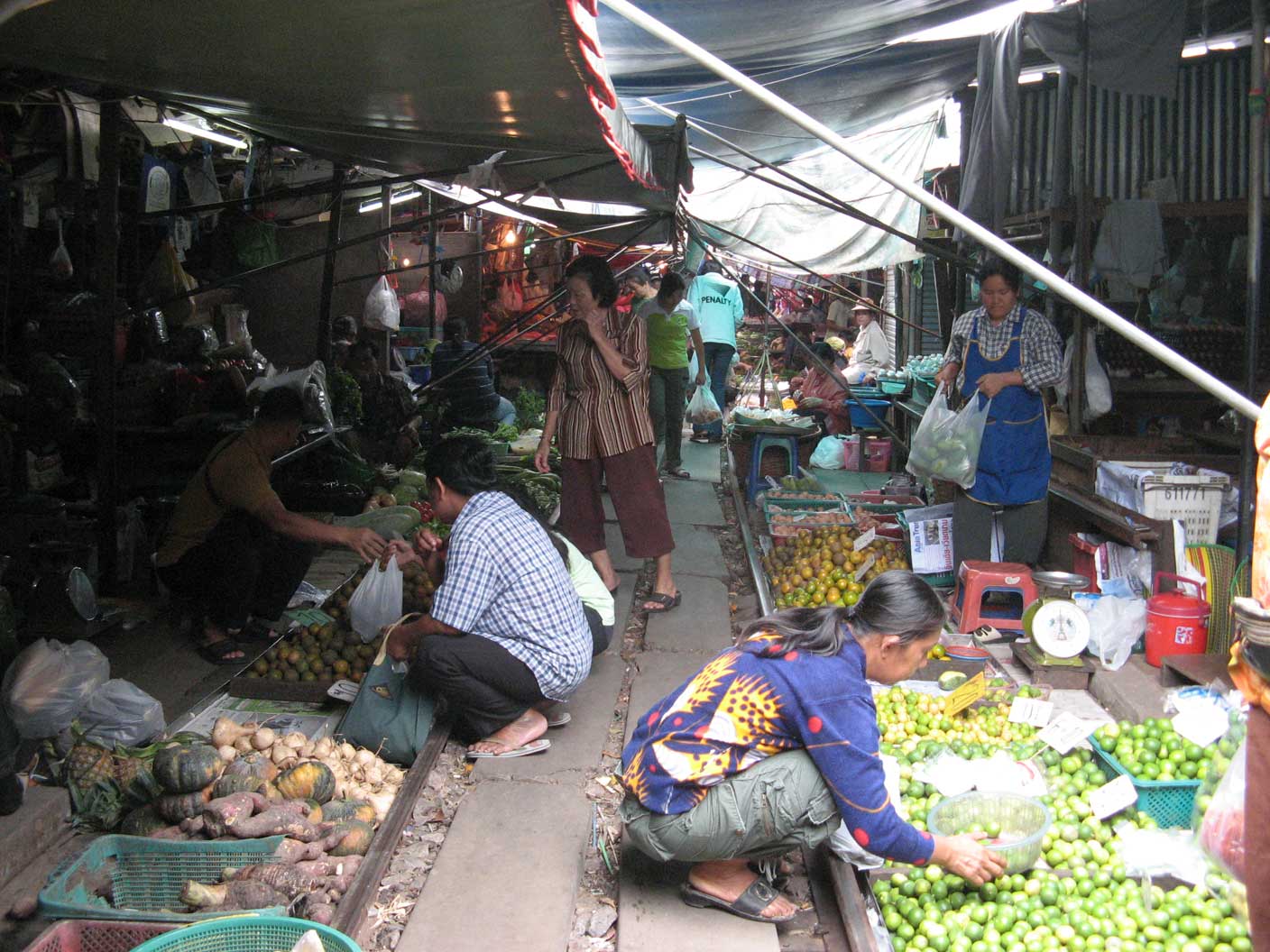
We continued on a small open truck to Amphawa, but since we had no reservations we started asking around and looking for a guesthouse or small hotel (there are no other kinds).
This being a very local sort of destination, Thai visitors know exactly what they want to do and see and plan accordingly, which meant the most charming little place in town was already full.
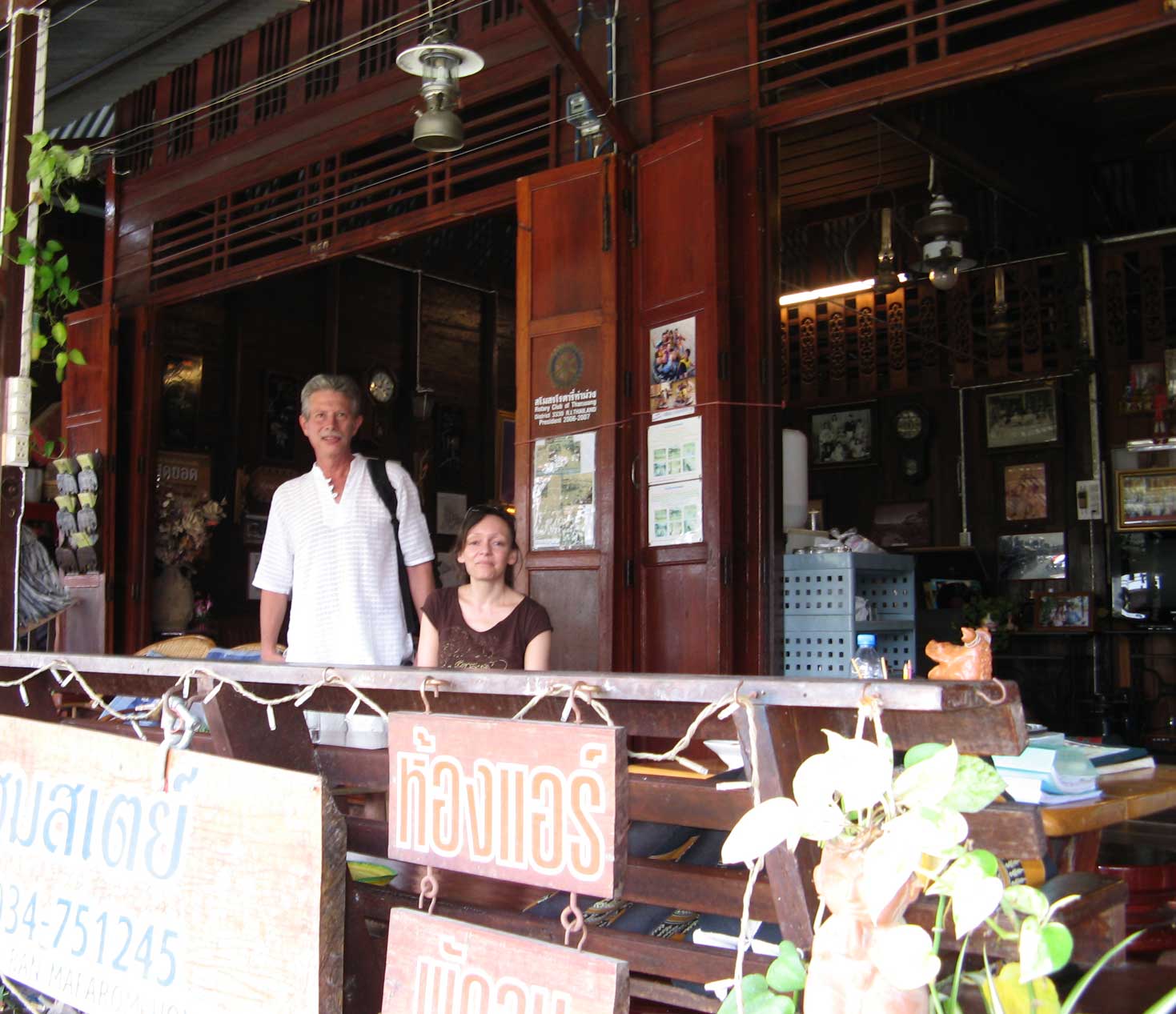
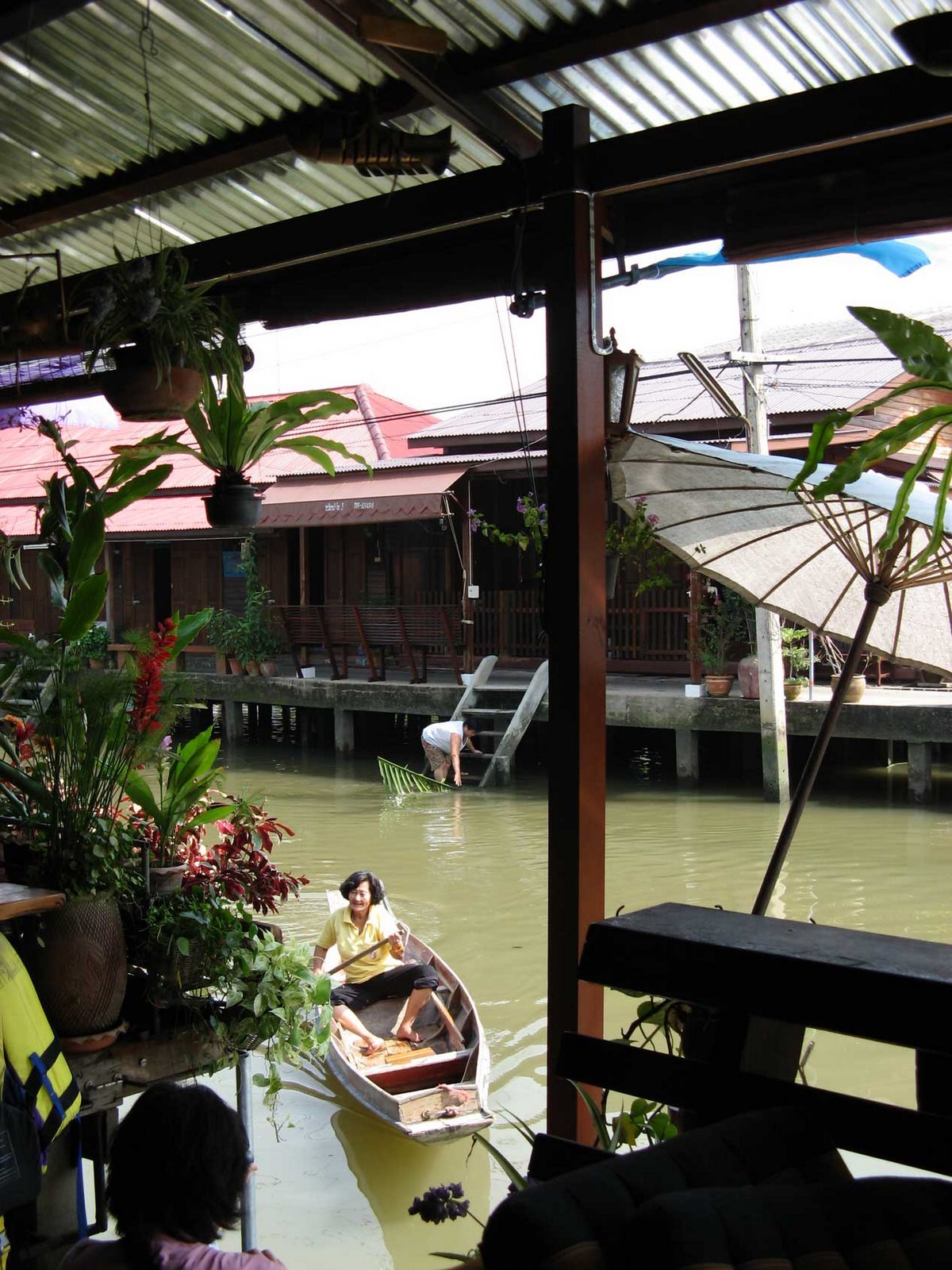
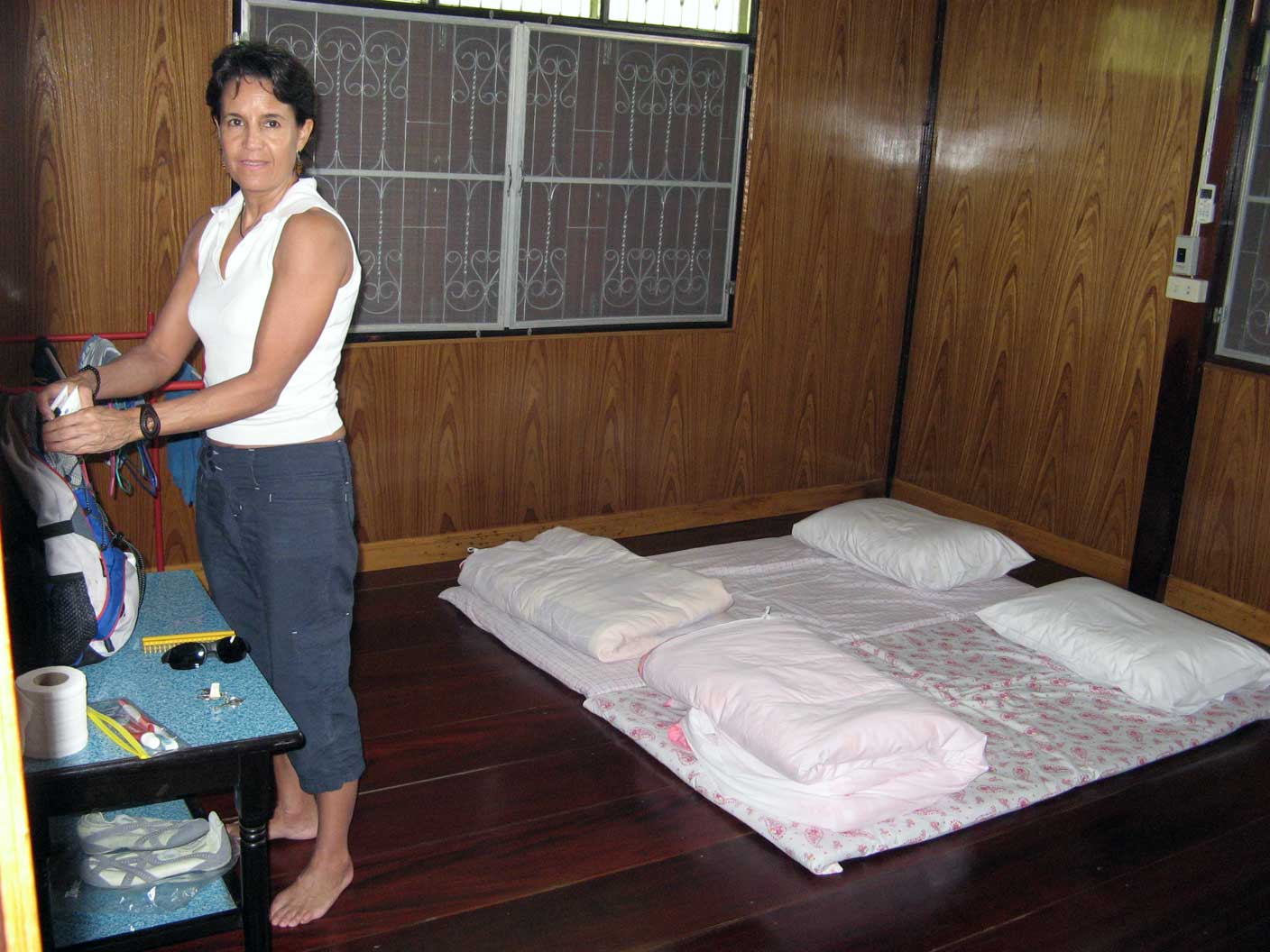
From the moment we arrived we were able to absorb something genuinely Thai in the atmosphere, and, as in my meditation practice, something deeply Asian in the pace of life.
Thais are always distinguished by their warmth, but in Amphawa that hospitality was particularly striking. Always ready to help, to try to understand you as best they can.
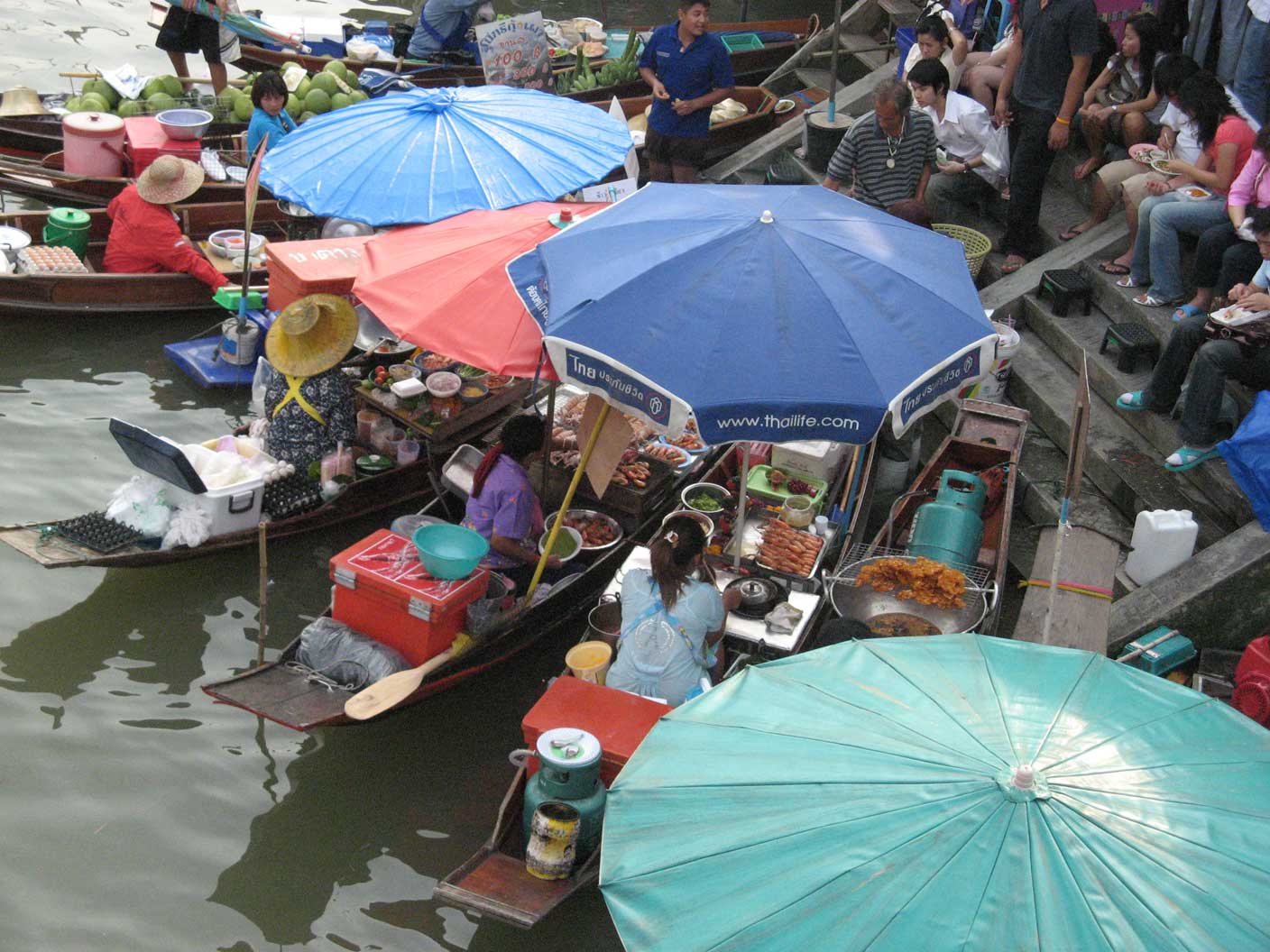
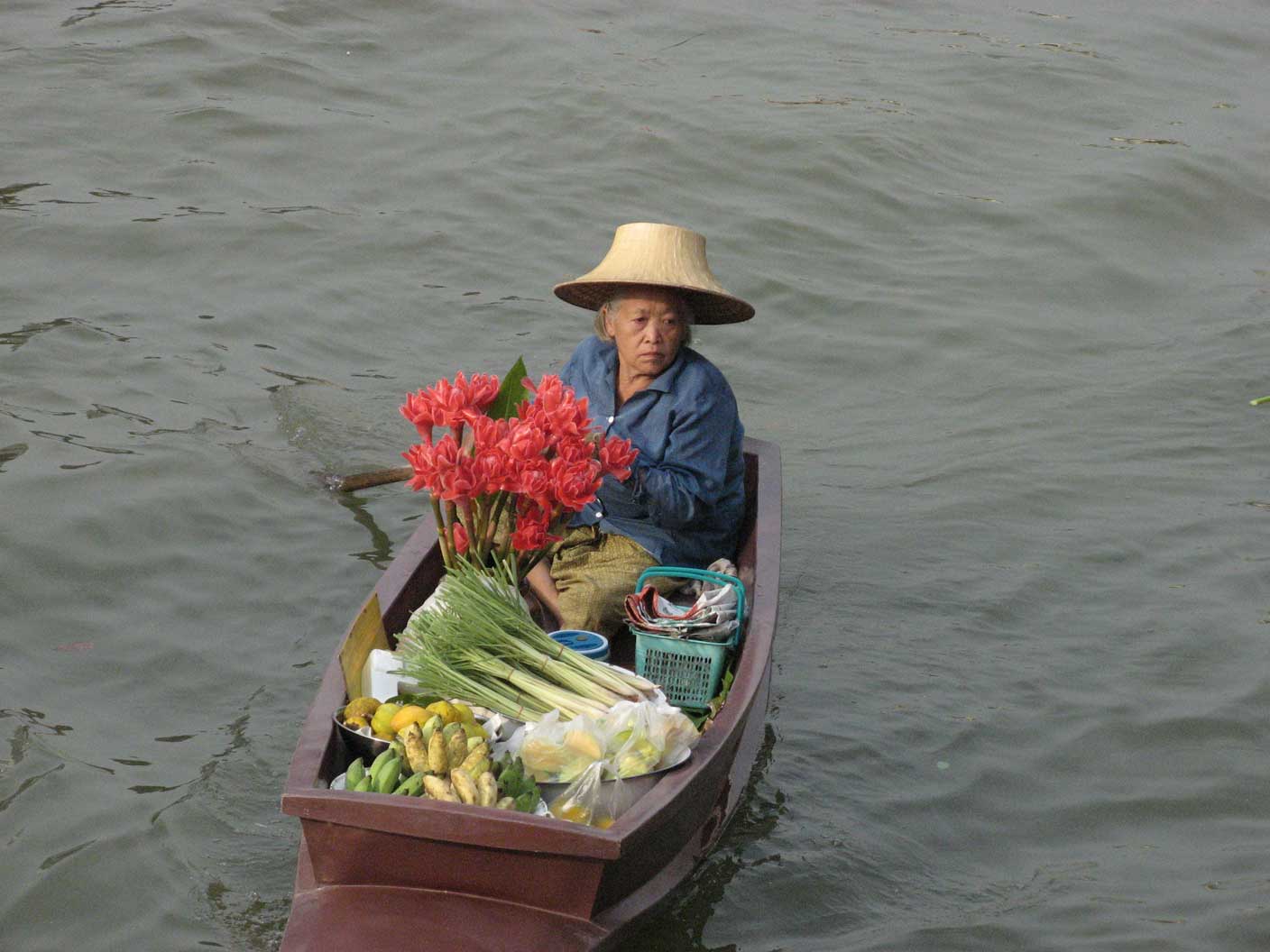
The one sit-down meal we had was at a very simple restaurant where, unable to communicate effectively, we had to stand up and point at whatever we wanted. It didn't turn out quite as expected, but we enjoyed it all the same. Our friend had a harder time of it, being a vegetarian with more particular ideas about food than we have.
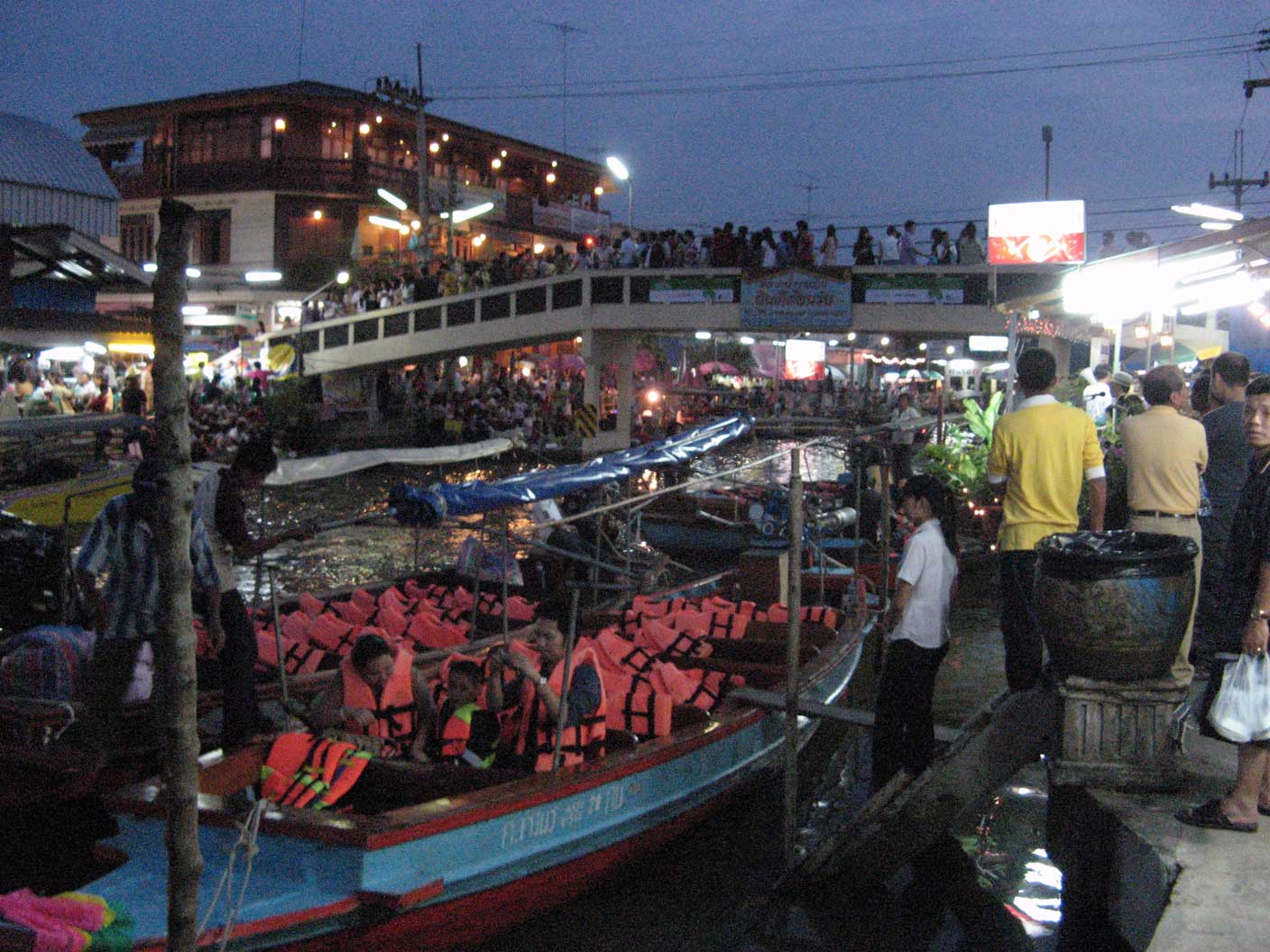
Once night falls, taking a boat out to see the fireflies is practically mandatory. The place is famous for the sheer abundance of these insects, and it draws crowds especially on moonless nights, when the darkness makes the spectacle easier to appreciate.
We hired a boat through the guesthouse and climbed aboard with a crowd of people. Boat after boat setting out along the river to find the glowing insects.
Like everything these days, there are too many of us wanting to see the same thing, which makes it nearly impossible to experience anything with few or no other people around. The sense of discovery we enjoyed for so many years in Mexico has largely been lost to this.
The ride took quite a while and, though it grew a little tedious toward the end, it was worth it. Suddenly you begin to see trees so thick with fireflies you'd swear someone had strung them with blinking lights. Curiously, the insects, all clustered together in the trees, synchronize their blinking, switching on and off in unison, which, at least to us, gave the whole thing an oddly artificial feeling. Laurence, our French friend, at one point started insisting they were electric lights and that someone was pulling our leg. But no, they are fireflies, and what's really happened is that we've all grown so accustomed to suspecting a trick that genuine wonder catches us off guard. The trees look like Christmas trees hung with blinking lights. After roughly two hours on the water we returned satisfied, feeling we'd witnessed something worth seeing. The two-hour commentary on board had been entirely in Thai, of course, so if it hadn't been for two young Thai women who, as is so often the case with Thais, stepped in without even being asked, noticing that we were the only three non-Asians on the boat and beginning to translate bits of the explanation for us, we would have understood nothing. As always, and at the risk of repeating myself, I want to say that the best thing about this country is its people.
It was a wonderful weekend, made especially so by seeing customs more authentic than anything you find in a city, which even when it's very Thai has become very cosmopolitan, and that almost always means too many things becoming identical from one city to the next.
Sanuk (the Thai spirit of finding joy and fun in everything)
Comments (1)
Les dejo un profundo deseo de paz interior,
energia y amor para estas fiestas.
Aprovechemos estos momentos de reflexiòn para
agradecer todo lo que tenemos.
Compartamos y ayudemos al que sufre.
Los abrazo con mi afecto de siempre.
MentesSueltas
PD: hermosa nota, amo ese pais, algun dia cumplire mi sueño.
New comments coming soon.